 View full size
 A different kind of runway.
- 25
- LooksNo physical garment samples.
- 13
- MinutesAn all-digital collection on screen.
- 800+
- GuestsAt Lobe Block in Berlin.
The show
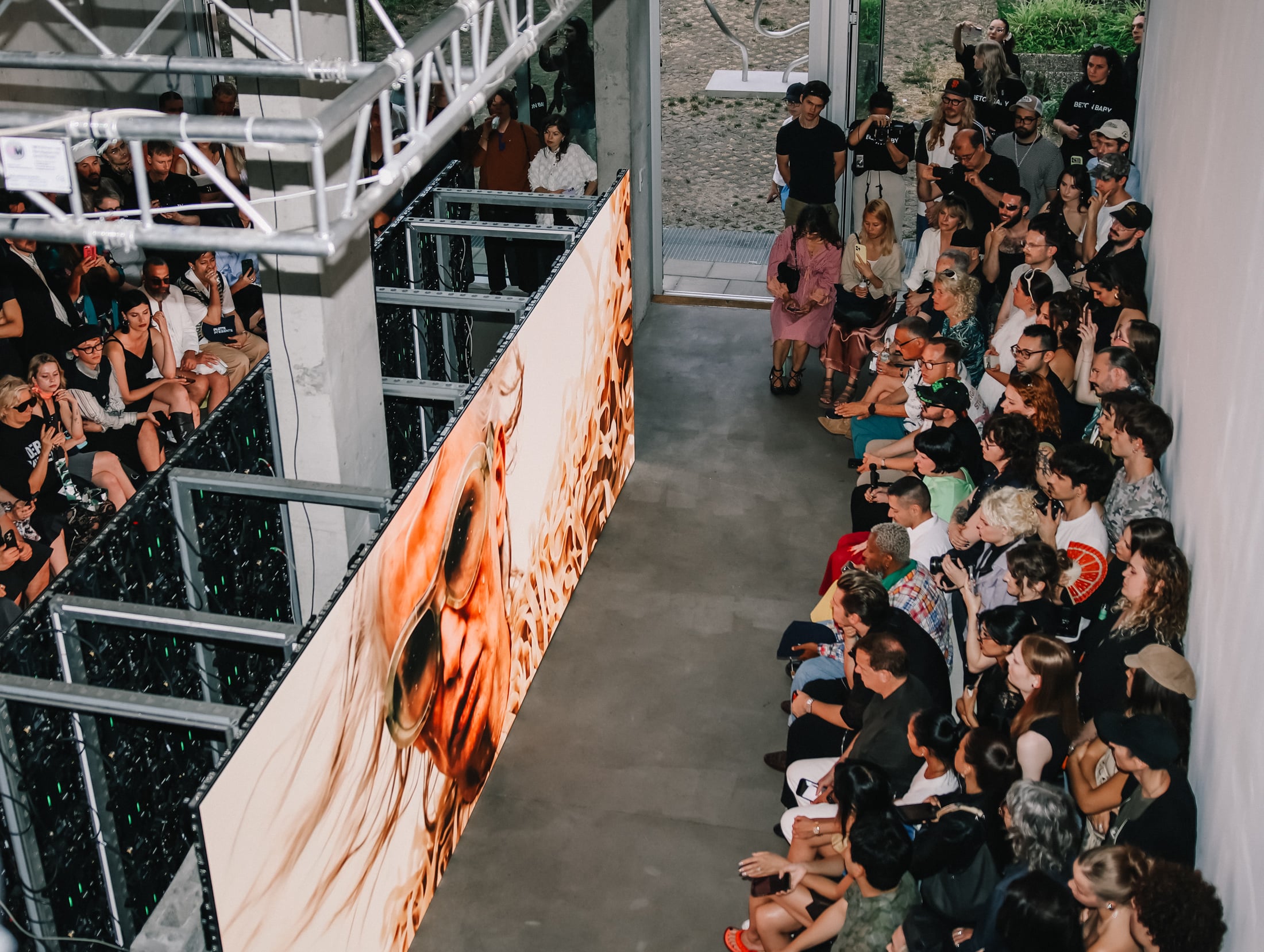
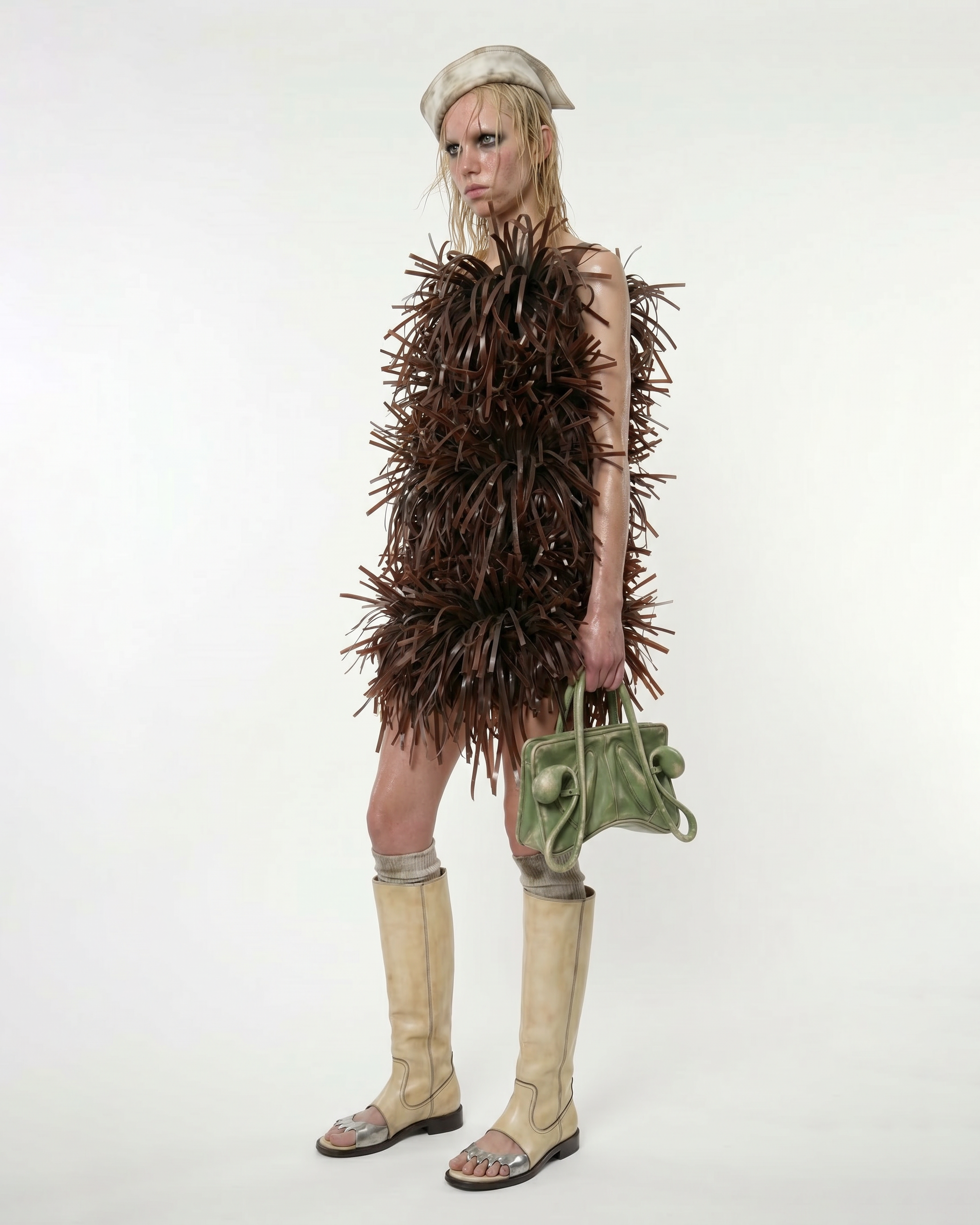
On the evening of July 2nd, more than 800 people packed into Lobe Block, a raw concrete building in Berlin’s Gesundbrunnen, expecting a fashion show. What they found instead was twelve linear meters of screens, two meters tall, with the audience seated along both sides, imitating a runway that wasn’t there. Over thirteen minutes, a twenty-five-look collection moved across the screens while a live artist played algorithmic, computer-generated organ music. Not one of the garments existed as a physical sample. The show was called BLACK EYE, and it was Taskin Goec’s first solo show.
Taskin is a Berlin-based designer and creative technologist working at the seam of physical and digital fashion. His idea for the week wasn’t a runway at all, but a “mixology” show: physical and digital mixed until the difference stopped mattering, staged as an experience engineered to stir emotion, powered at its core by Krea.
"I'm not promoting clothes that I sell. I'm promoting how to make fashion today, to the industry."
Designed before it was ever made
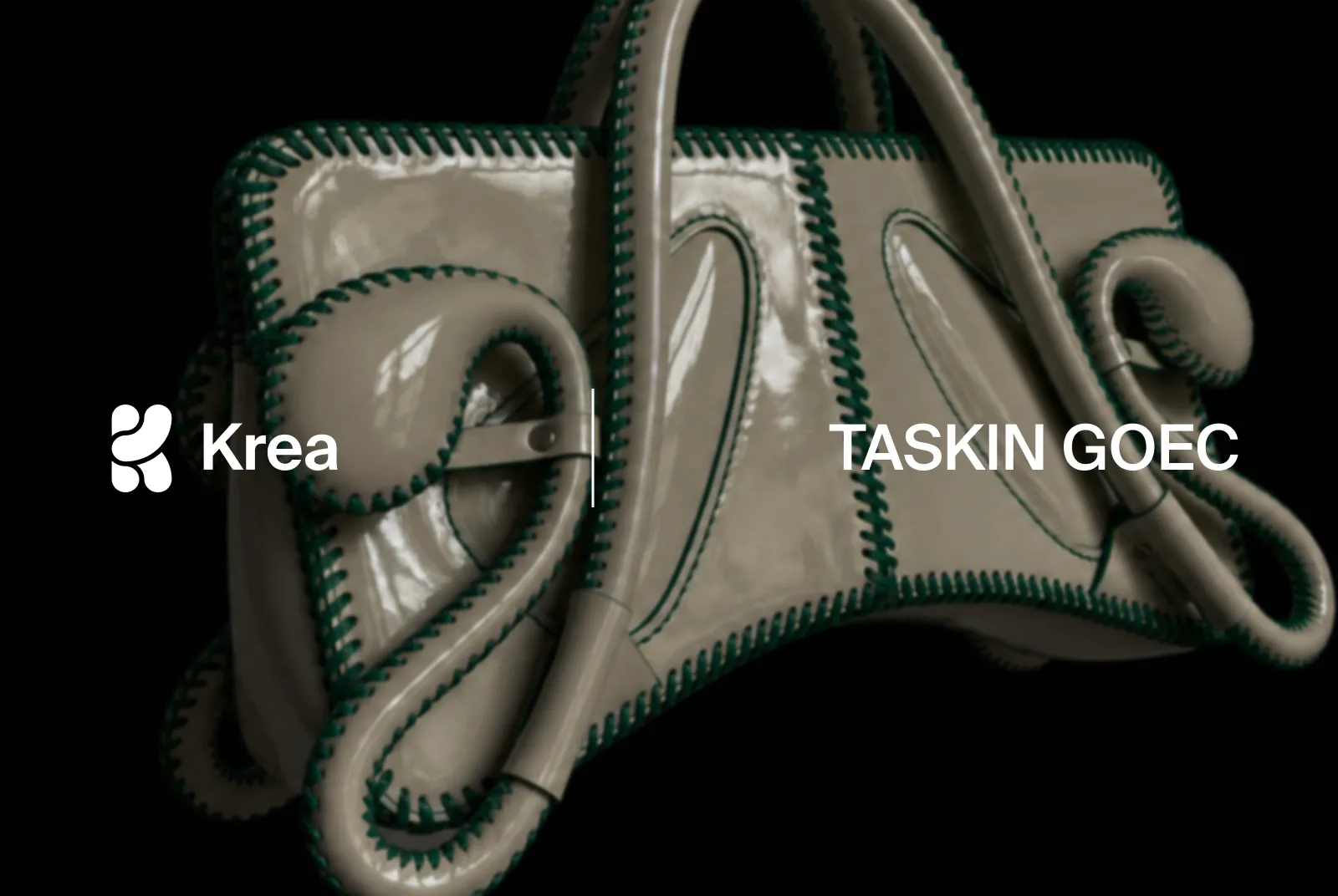
Taskin ran every stage of BLACK EYE inside Krea, from ideation to garment design to styling to the synthetic models wearing the looks, before they were set in motion for the screens. Nothing on the screens existed as a physical object, and that was precisely the point. It quietly flipped the usual order of fashion: rather than sketch, sample, produce, then show, Taskin could present a finished collection first and make the physical version only if and when it’s wanted. However, while nothing on the screens existed as a physical object, it all read as convincingly real, down to the way the light caught a button. That was the quiet provocation of the night: a room of fashion people, moved by twenty-five looks that had only ever existed inside Krea.
"People called it futuristic, the fashion of tomorrow. I disagree, I think it's the fashion of today. This is how we can and should be designing and presenting now."
The workflows behind the collection are ones Taskin built himself. Trained in couture and a Hyères 2025 finalist, he brings a garment-maker’s eye to the tool; he reads how a seam falls, where a silhouette holds or breaks. That fluency is the foundation: the workflows work because they’re built on someone who knows how clothes are actually made.
What a screen can show that a runway can’t
The audience had come for a traditional runway, and the reaction to what they got instead was overwhelmingly positive. Part of what landed was something Krea made possible: because the looks were generated in Krea rather than sewn and sent down a catwalk, a screen could show what a live runway physically can’t. Macro shots, full close-ups on the stitching, details that would blur past you in ten seconds of runway held, framed, and legible. There was exactly and only one physical takeaway on the night: the guests’ goodie-bag T-shirts, carrying a graphic made in Krea.
"The most innovative event of Berlin Fashion Week"
"Making the materials seem almost alive"
BLACK EYE worked as spectacle. But it also read as a glimpse of where fashion might be heading: an entire collection conceived, designed, and staged in Krea, convincing a room that had come expecting a runway.
The show wasn’t just made with Krea; it was made of Krea.
In case you want to know more about Taskin’s work: @taskingoec
Want to know what Krea could do for your brand?
Talk to our enterprise team about bringing your next collection, campaign, or show into Krea.
Contact Sales