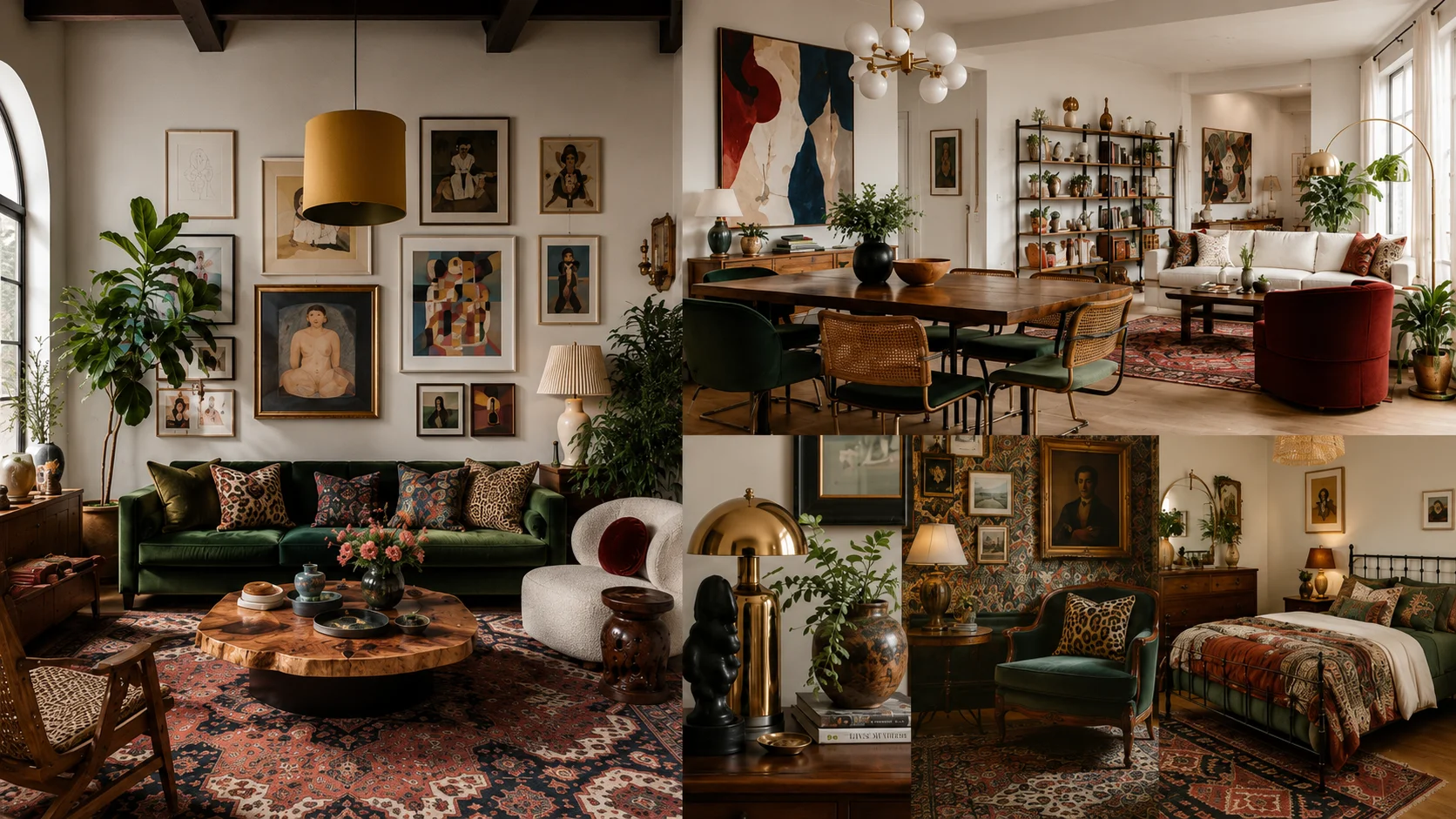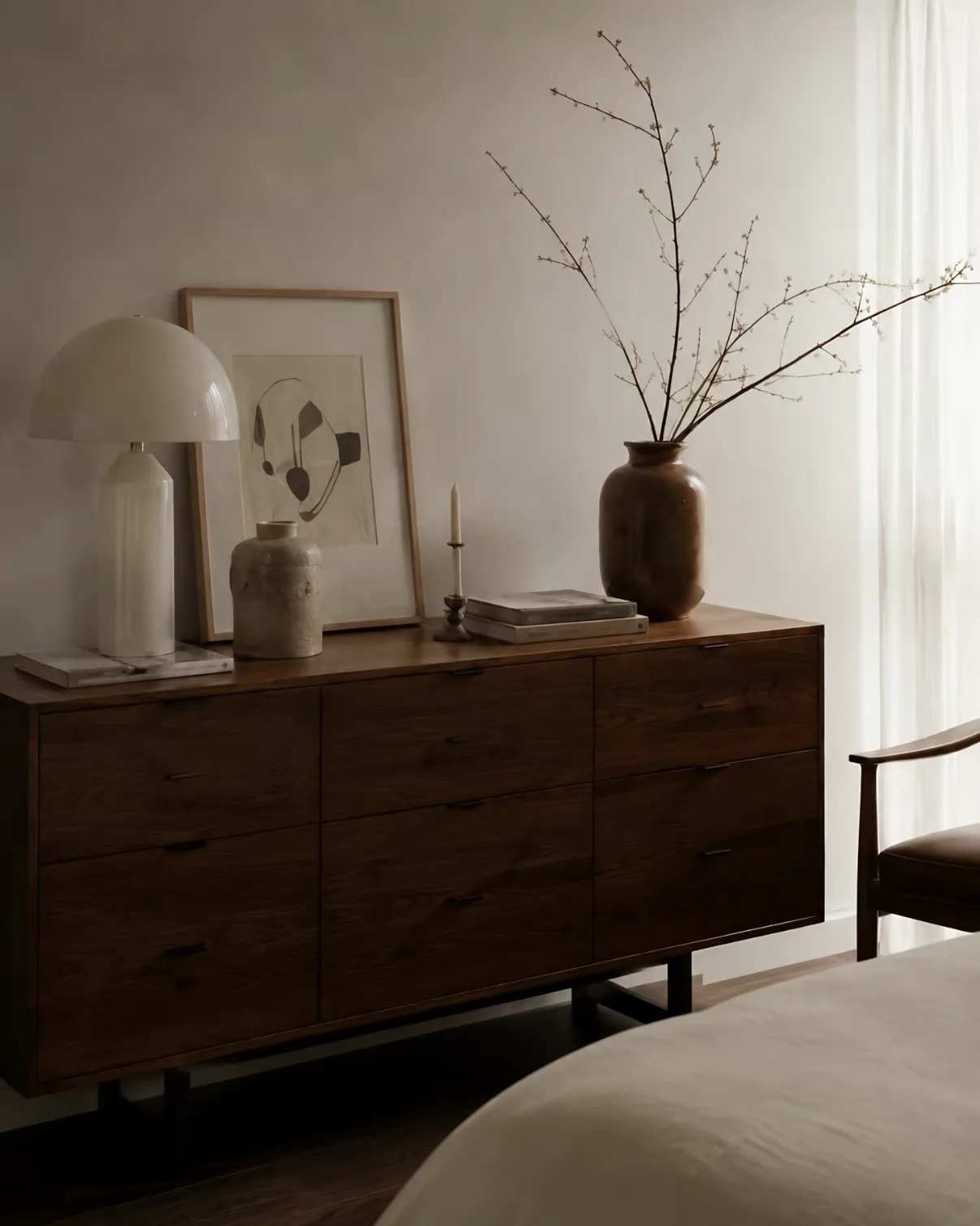
A cozy interior is a room that stops asking things of you. It holds you at a comfortable scale, gives your eye somewhere to rest, and lets you stop performing the moment you sit down. That feeling is produced by a handful of decisions about weight, texture, light, and restraint, and it survives almost any style label you put on top of it.
Most advice treats coziness as a shopping list. Add a throw, light a candle, swap the bulbs for something warmer, choose beige. Those things are pleasant and none of them are the mechanism. A room stacked with soft objects can still feel restless, and a room with dark floors and hard wood can feel like the calmest place you have been all week. What separates them is balance: something heavy to settle the eye, something soft to release it, light that is allowed to fall away, and enough restraint that no single object is competing for your attention.
Here is what actually produces that feeling, and how to read it in a room you are standing in or planning.
Visualize your room in Krea
Generate versions of the same space with different palettes, wood tones, and light before you commit.
Try Krea ImageKey takeaways
- Coziness is an emotional outcome, not a style. Modern, rustic, and minimal rooms can all achieve it.
- Dark, heavy elements give the eye somewhere to settle, so a room does not feel like it is floating.
- Pale walls and soft textiles are what stop that weight from turning into pressure. You need both.
- Even lighting flattens a room. Pools of light with shadow between them are what create depth.
- A cozy room is full of real life but nothing in it is competing to be looked at first.
Cozy Is a Feeling, Not a Style Label
The word gets attached to a look: cottage furniture, wool blankets, a certain palette of oat and clay. But rooms that feel genuinely settled turn up in every style. A mid-century apartment with dark walnut and black leather can feel more restful than a room built entirely from soft neutrals, because comfort comes from how the elements balance rather than from which catalogue they came out of.
That reframing is useful because it changes what you shop for. Instead of asking whether something is cozy, you can ask what job it does in the room. Does it add weight or release it? Does it hold light or absorb it? Does it ask to be noticed, or does it sit quietly and let something else take the attention? Once a room is read that way, style becomes a surface decision and the feeling becomes something you can actually design.
Visual Weight Gives the Eye Somewhere to Rest
A room with nothing substantial in it feels unfinished, and no amount of soft furnishing fixes that. Weight is what stops a space from drifting: dark floors, a full-height bookcase, a heavy timber table, furniture with real presence. These elements anchor a room the way a bass line anchors a piece of music, and they give your eye a place to stop moving.
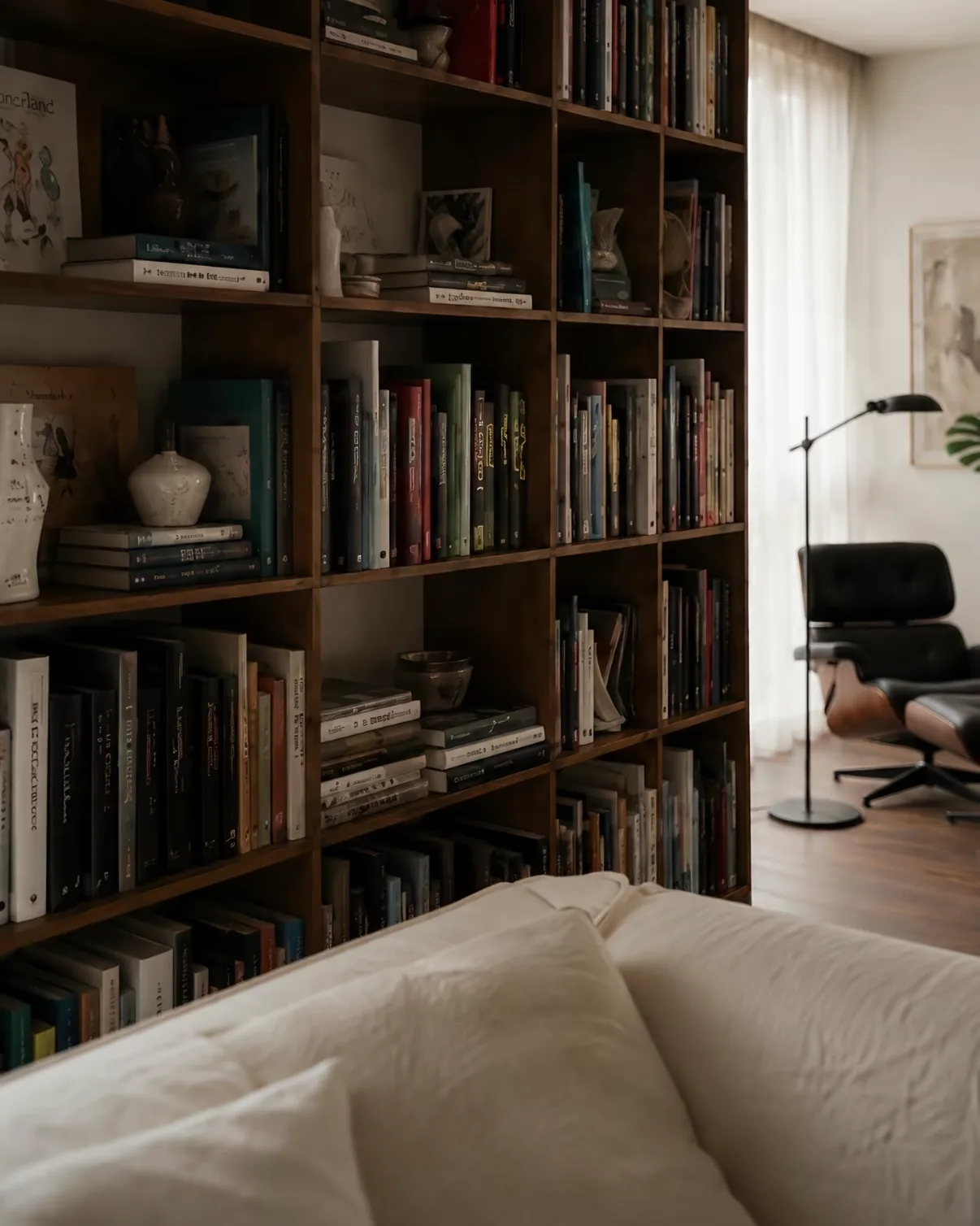
The mistake is thinking weight means darkness everywhere. A room built entirely from deep tones closes in. What makes the bookcase above work is the wall of warm white behind the sofa and the pale linen in front of it, which give the eye somewhere to breathe out. Dark elements hold the room down; light ones let it expand. Rooms that feel oppressive usually have the first without the second, and rooms that feel thin have the second without the first.
Soft Materials Do the Opposite Job
If weight is what settles a room, softness is what makes it approachable. Linen, wool, jute, sheer curtains, and worn leather all break up hard edges and absorb sound, and a room with none of them stays subtly tense no matter how well composed it is.
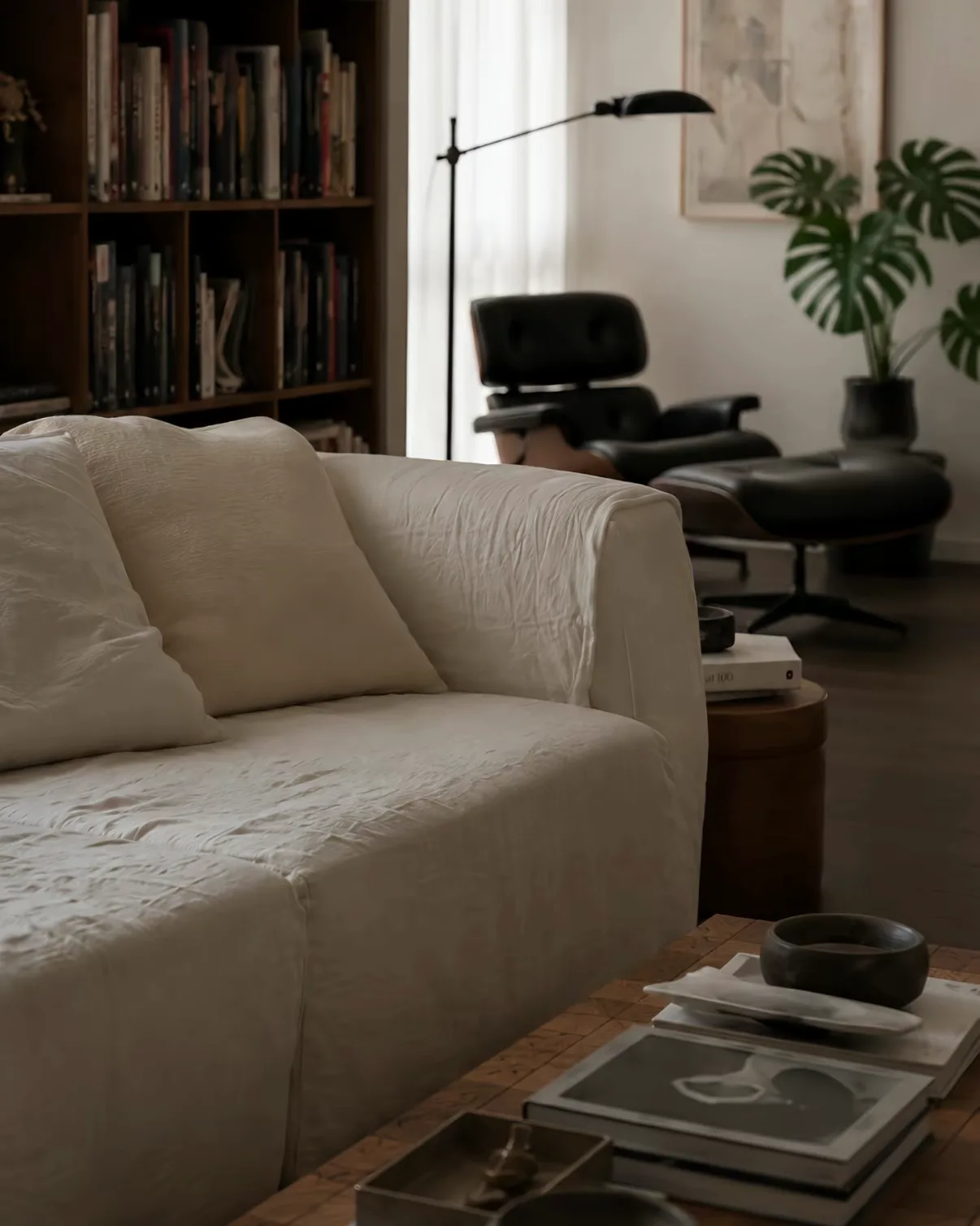
The reason crumpled linen reads as comfortable is that it shows use. A perfectly upholstered surface signals that sitting down would disturb something. A cushion that has already been leaned on signals the opposite. Texture also does quiet work on light: a matte, woven, or slubby surface scatters it, while gloss reflects it back at you. That is why a jute rug and a linen cover soften a room more than their color alone would suggest.
Light That Falls Away Makes a Room Feel Held
The most common thing that keeps a room from feeling cozy is uniform brightness. Lighting every corner evenly is a habit borrowed from retail, and it flattens a space: nothing recedes, nothing is emphasized, and there is no sense of depth for you to sit inside.
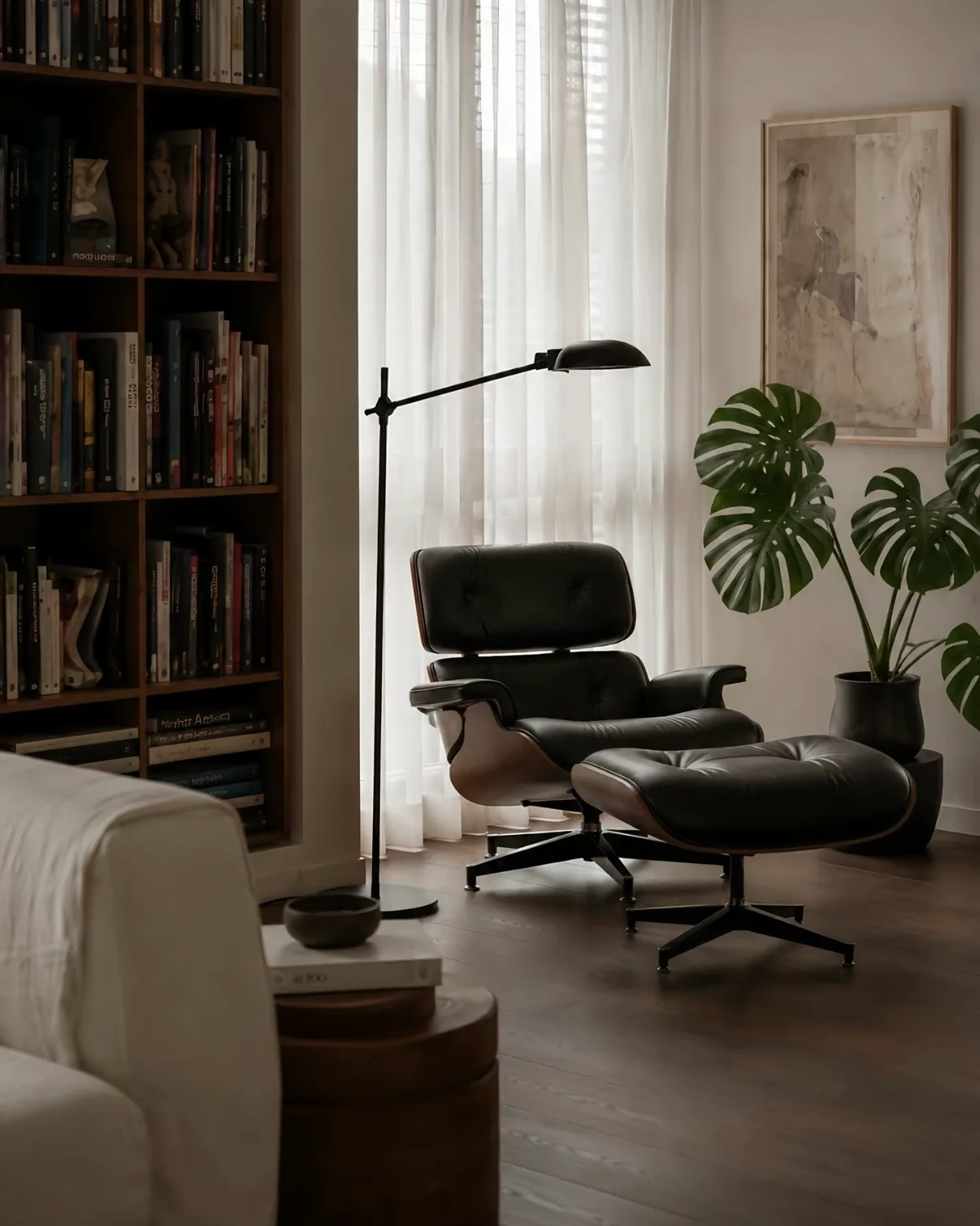
Rooms feel enclosing when light is allowed to concentrate and then fall away. A window with a sheer curtain gives you a bright zone that softens as it travels; a lamp beside a chair makes a small, defined territory; the shelves and corners beyond it stay in shadow, and the shadow is what gives the bright part its meaning. Aim for a few pools of light rather than one even wash, and let the distance between them stay dim.
A Cozy Room Has Content, Not Clutter
Rooms that feel lived in are full of evidence: books that have been read, ceramics that get used, art chosen rather than matched, plants that are actually growing. A room stripped of all of it reads as a showroom, and no amount of warm lighting rescues that.
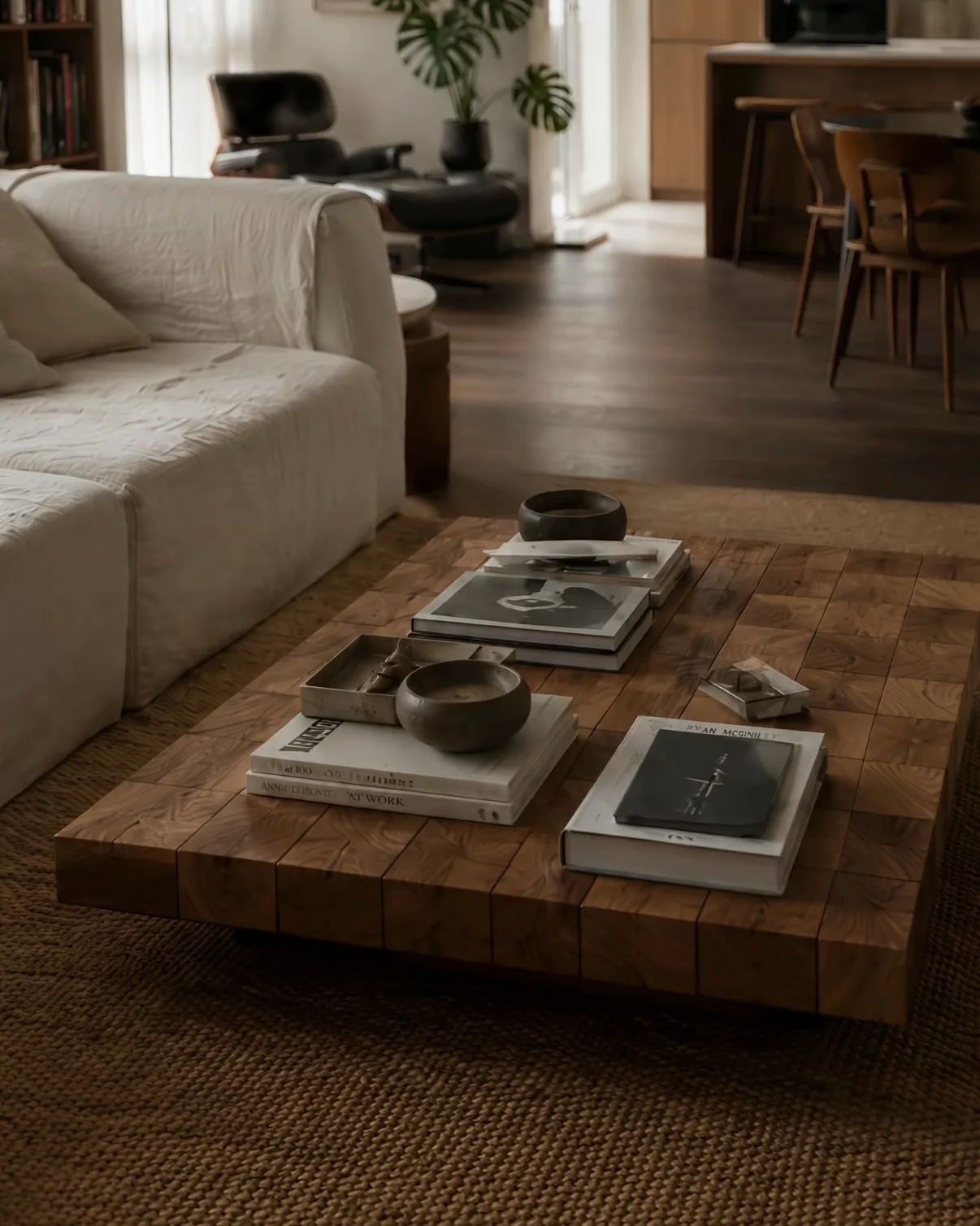
The distinction between content and clutter is not quantity, it is competition. In a calm room, plenty of things are present but nothing is straining to be the focal point. Objects sit in groups, share a material family, and let your eye pass over them without stopping at each one. Clutter happens when too many items are individually demanding, and it can happen with six objects as easily as sixty. Restraint here is more valuable than empty space.
Room to Breathe Keeps Warmth From Turning Into Weight
Cozy and crowded get confused constantly. Filling a room to the walls does add enclosure, but it removes the pause that makes enclosure feel restful rather than pressing.
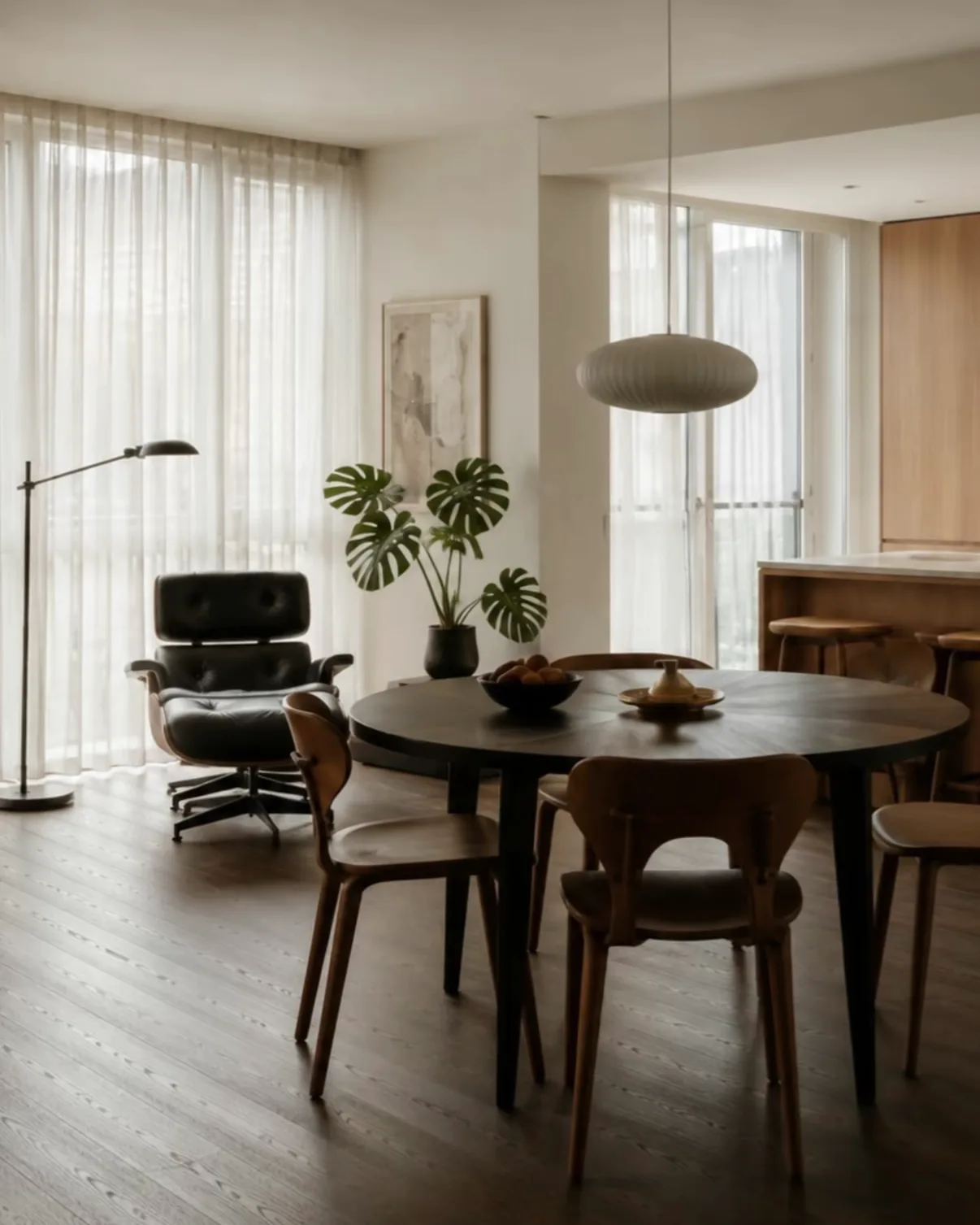
Leave floor visible. Let a wall stay bare where the eye needs a rest. Keep the routes between seating, table, and window clear enough that moving through the room is easy. Zones that connect but keep their distance, a place to eat, a place to sit, a place to read near the window, let a room hold several kinds of use without any of them crowding the others.
How to Make a Modern Interior Feel Cozy
Contemporary rooms tend to start with the opposite defaults: flat cabinetry, hard surfaces, cool light, and very little texture. They are not incompatible with comfort, they just need the missing half added back deliberately.
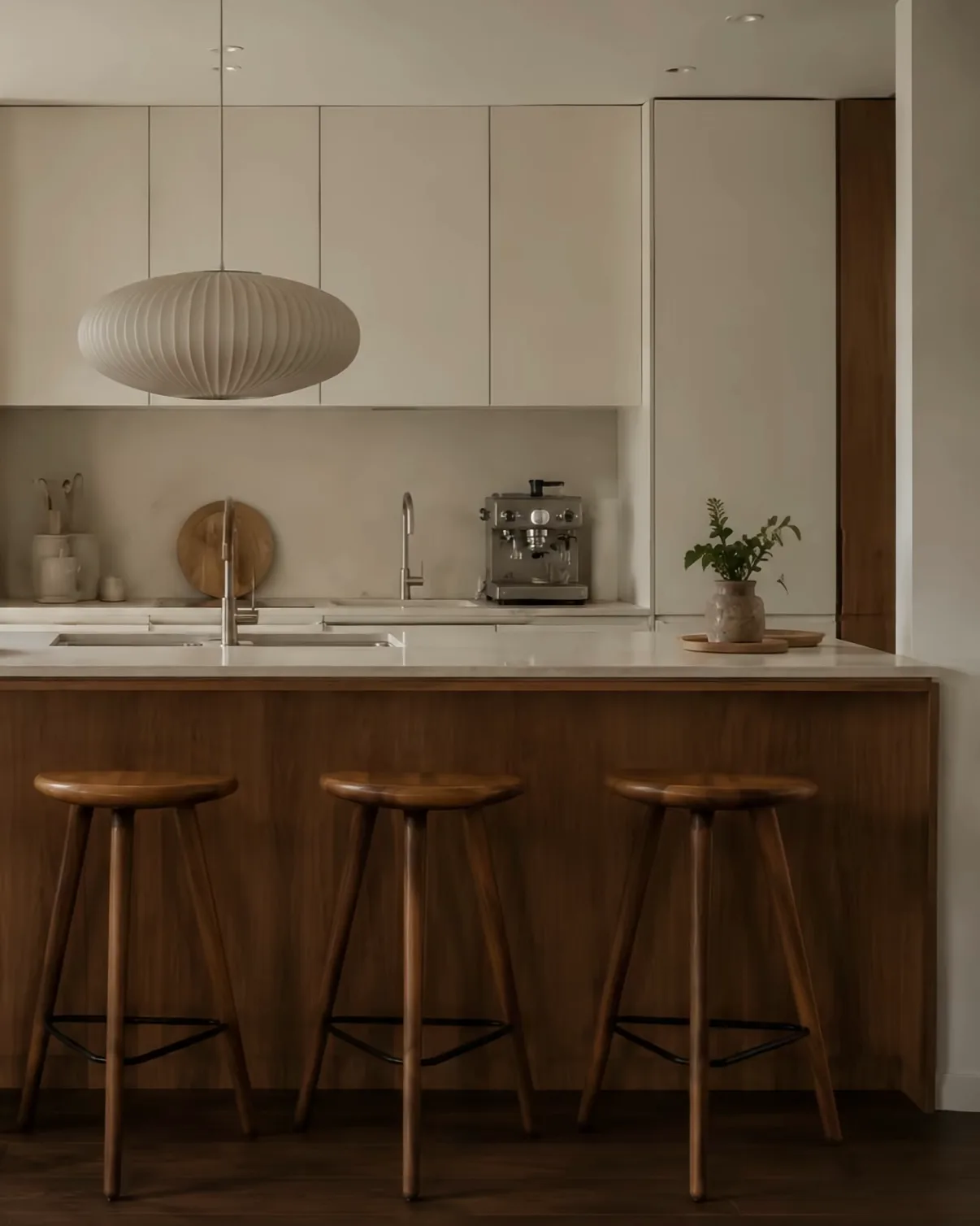
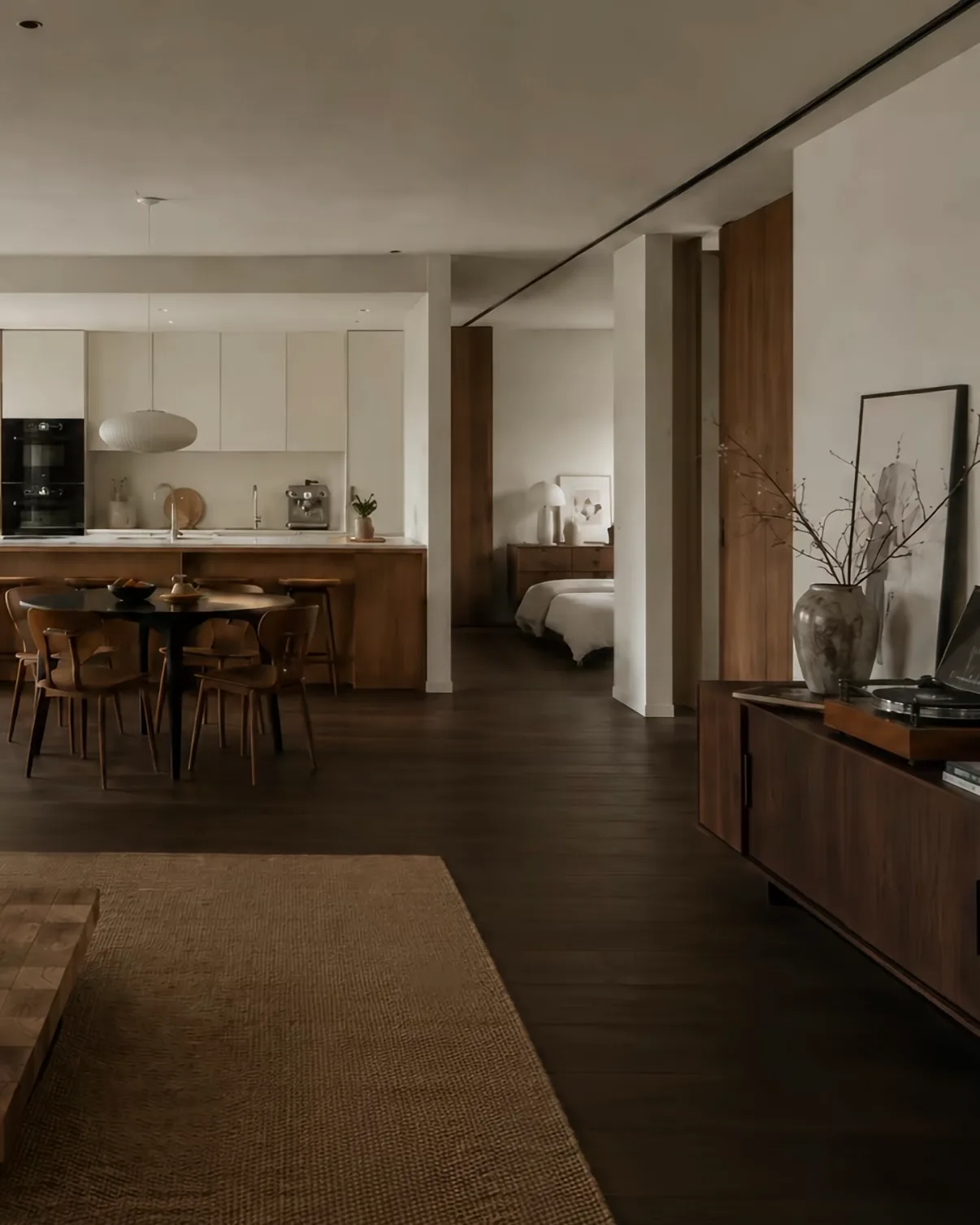
Three moves do most of the work. Introduce a natural material with visible grain, so the eye has something irregular to land on. Warm the light, and lower some of it to table height instead of running everything from the ceiling. Add one genuinely soft element, a linen curtain or a wool rug, to break up the hard surfaces. The kitchen above is still unmistakably modern; the timber, the low pendant, and the worn stool seats are what keep it from feeling clinical.
The Test of a Cozy Room
A room has arrived when you stop noticing it. Not because it is plain, but because nothing in it is asking for a reaction. You are not being reminded that this was carefully designed, and you are not adjusting yourself to fit the space.
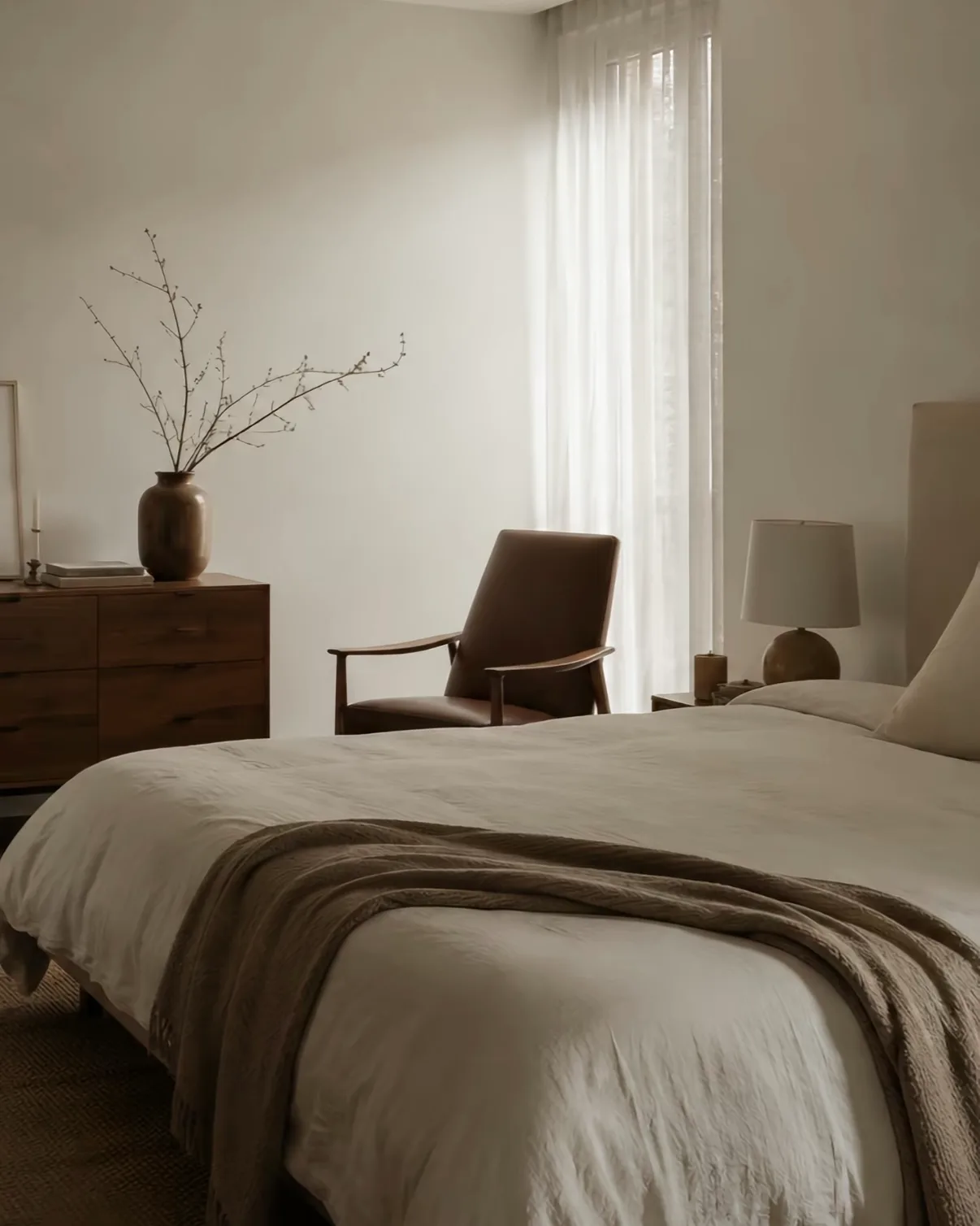
That is a slower ambition than a room that photographs well, and it is worth more day to day. A space built this way rarely startles you on the first visit. It just gets easier to be in, which is the only measure of comfort that survives past the first week.
If you are working out a direction before committing to floors, materials, or furniture, it helps to see the combinations first. You can visualize palettes, wood tones, and lighting moods with Krea’s AI image generator and compare a few versions of the same room before anything is bought.
See the space before you buy
Test a floor, a palette, or a lighting mood in minutes with the Krea image generator.
Open Krea Image