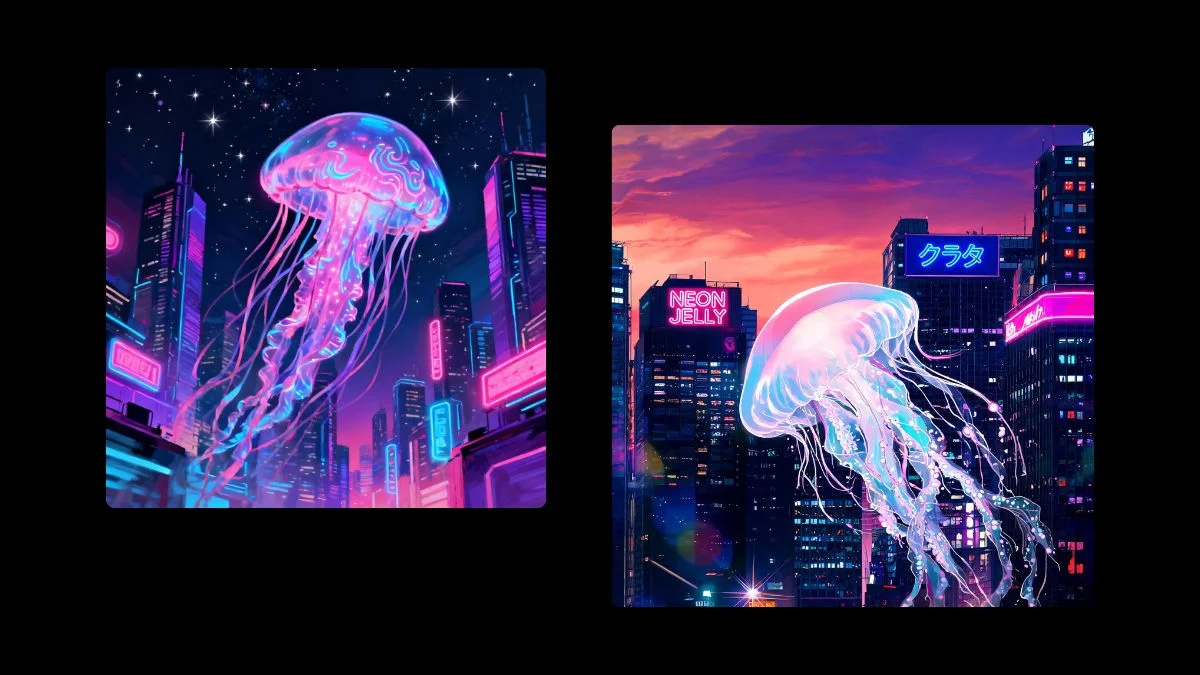
Seedream 4.0 and Flux are credible finalists because both combine image generation with prompt-led editing. ByteDance frames Seedream as a unified multimodal generation-and-editing system, while Black Forest Labs built FLUX.1 Kontext around text-and-image inputs for in-context changes.
The verdict depends on the deliverable: use Seedream 4.0 for high-volume, text-heavy, brand-consistent marketing assets; use Flux for realistic hero imagery and deeper creative control. The deciding cost is what it takes to reach a final asset, including revisions and cleanup, rather than a single quality score.
Public documentation and Gaurav Bisen’s May 2026 production comparison point to the same split: Seedream favors campaign scale, while Flux favors fidelity-led hero work. Route each job by its output instead of forcing one model into every campaign.
Seedream 4.0 vs Flux at a glance
| Decision dimension | Seedream 4.0 | Flux, including Kontext / 1.x variants |
|---|---|---|
| Core workflow | Unified generation and editing architecture | Text-and-image in-context generation and editing with Kontext |
| Typical hosted price | About $0.03 per image | About $0.04 for FLUX.1 Pro to $0.06 for Ultra |
| Text-heavy graphics | Strong with dense text, layouts, formulas, and multi-line copy | Can manipulate typography in context; dense text has more often needed cleanup |
| Reference work | Batch inputs and outputs; supports roughly 10 reference images | Character preservation, local edits, and style-reference workflows |
| Hero-image strength | Commercially clean output and native 4K capability | Strong materials, skin texture, natural light, and fabric behavior |
| Deployment | Flagship is API-accessible, without public self-hosted weights | Kontext dev is a 12B open-weight model for non-commercial use; Pro and Max are proprietary |
Test Seedream 4.0 and Flux yourself
Generate with both models in one Krea session and pick the winner for your campaign.
Open Krea ImageSeedream 4.0 costs less when a campaign needs hundreds of variants
Seedream 4.0 has the clearer cost advantage when a creative process produces hundreds of attempts before the approved set emerges. In Gaurav Bisen’s 300-iteration campaign-refinement example, Seedream costs about $9, while Flux costs roughly $12 to $18. That difference is enough to affect how a team behaves: localized ads, catalog backgrounds, and A/B variants can receive more concept exploration instead of fewer generations chosen to protect the budget.
Flux earns the higher per-image cost on hero visuals and editorial images where a flagship landing-page render, a product-launch shot, or another one-off needs photographic credibility and precise art direction from the first generation. Bisen recommends it for those cases because a cleaner first pass can avoid a reshoot or heavy compositing work, and that saved production time can outweigh several cents per image. He recommends it for flagship visuals and editorial pieces where first-pass realism and precise art direction matter, especially when a cleaner initial generation can prevent a reshoot or a round of heavy compositing. For a flagship landing-page visual or product-launch image, the savings from skipping one reshoot or a heavy compositing session can easily outweigh several cents per generation. Although Seedream is cheaper per attempt, the calculation flips for a small image set whose approval depends chiefly on photographic credibility.
Seedream 4.0 is the stronger choice for ads and social graphics that contain real copy
Seedream 4.0 cuts manual cleanup for campaign graphics with readable, exact wording, and its text rendering keeps slogans and labels aligned and legible. ByteDance demonstrates a poster edit that changes “Santiago Music Festival” to “Seedream Photography Exhibition” while keeping its color, font, and alignment. Seedream supports dense layouts, charts, and multi-line copy in posters, reports, and other text-heavy assets. ByteDance’s Seedream 4.0 documentation lists those capabilities alongside batch reference workflows and output up to 4K: ByteDance’s Seedream 4.0 documentation
That capability matters because a slogan, price line, date, or label often belongs inside the design rather than in a separate text layer. A product label, promotional poster, or localized social asset gets expensive when every generated image has to go through a designer for typo fixes and layout cleanup. Bisen writes that Seedream 4 “mostly solved” the long-running problem of legible in-image text, which makes it a practical starting point for assets where copy is part of the visual system.


Flux can manipulate typography in context, yet it is the riskier default when the final asset contains dense or exact copy. Kontext supports type changes within an existing image, which is useful for a checked headline or a limited text replacement. Masonry’s comparison reports that Flux text has historically required post-editing more often than Seedream text. Keep Flux to short, inspectable type changes where a small amount of copy can be checked and corrected in context.
Flux produces the more convincing hero imagery when material and skin realism decide the brief
Flux has the stronger documented case for images that must read as photographs rather than polished commercial graphics. In Masonry’s side-by-side production work, Flux reads most convincingly as a photograph because its materials, skin texture, and window light hold up under close comparison. Fabric behavior is another strength. Bisen puts the decision plainly: “If you handed me one prompt and said ‘make this look like a real photograph,’ I’d reach for FLUX first.”
That recommendation makes Flux the first model to open for a photoreal hero image. Fabric, metal, and glass help seal the photorealistic read, and subtle shifts in window light can make the image feel credible. Flux makes a better first pass when those details are the basis of approval rather than decoration around an offer.


Seedream can still produce polished campaign imagery, but Masonry identifies a glossy, commercial-clean treatment of people as a limitation. Prompts requesting natural skin texture can reduce that bias, yet a candid or editorial brief begins with a different visual target. Use the clean finish deliberately for polished ad creative, then move a photographic hero assignment to Flux when natural texture is the non-negotiable detail.
Brand-consistency work is a tie, but the two models solve it differently
Seedream 4.0 reduces setup for campaign sets built from several references and repeated subject treatments. ByteDance says it accepts batch multi-image inputs and outputs, with support for roughly 10 reference images. Official examples also show prompt-led edits that preserve three specified elements, such as color, font, and alignment, or keep a subject unchanged. A marketer can hold a product, spokesperson, or visual system constant while changing the background, offer, format, or copy across a campaign set.
That approach fits repeatable campaign production because reference material can travel with the request instead of being reconstructed in each prompt. It is especially useful when the approved look includes a particular pack shot, palette, and layout language. The benefit is fewer opportunities for a catalog or localized campaign to drift away from the approved visual system.
Flux Kontext approaches consistency as an iterative scene-editing problem. Black Forest Labs describes character identity and scene relationships surviving local edits, global changes, and style-reference workflows without finetuning; it also lists typography manipulation among Kontext’s editing capabilities. Black Forest Labs’ FLUX.1 Kontext documentation
This gives Flux the advantage when the same person or object must move through substantially different environments, outfits, or compositions while remaining recognizable. Although Seedream’s multi-reference workflow is more direct for high-volume asset families, Flux better fits narrative continuity across heavily altered scenes. The distinction is between keeping a campaign template coherent and carrying a subject through a sequence of more ambitious creative transformations.
Seedream 4.0 wins native 4K output, while Flux offers the more flexible technical ecosystem
Seedream 4.0 has the cleaner specification for marketers who need large-format output directly from the model. ByteDance lists native output up to 4K, or 4096 pixels per side. Masonry reports that Flux resolution varies by variant, reaching strong 2K to roughly 4-megapixel output without an equivalent native-4K capability across the full range.
Seedream’s native 4K output gives print pieces, large display assets, and tight crops usable resolution from the start, at up to 4096 pixels per side. Resolution is a delivery constraint for print and large-format work once the visual direction is approved, because the output has to meet the required size before production can proceed. A detailed poster or retail display has little room for an output pipeline that starts below the required size.
Flux offers more flexibility when a technical team needs an adaptable model stack instead of a flagship API workflow. Black Forest Labs released FLUX.1 Kontext dev as a 12B open-weight model that can run on consumer hardware, while Seedream’s flagship has no public self-hosted weights. Kontext dev is licensed for non-commercial use, and Flux Pro and Max remain proprietary offerings.
The practical advantage is running a 12B open-weight model locally for prototyping and custom workflows on consumer hardware. Commercial deployment requires a license check, so open weights should not be treated as an automatic production answer. Seedream simplifies the route to a hosted flagship result; Flux broadens the range of experiments a technical workflow can support.
Choose Seedream 4.0 if / Choose Flux if
Route the decision by the deliverable that takes the most production time and the revision burden it will carry.
Choose Seedream 4.0 if:
- You need social ads, posters, or labels with multi-line copy.
- You are producing catalog variants, localized campaign assets, or A/B tests at high iteration volume.
- You need the product, subject, or palette to stay consistent across a reference-heavy campaign set.
- You need native 4K output for a detailed print or large-format deliverable.
Choose Flux if:
- Use Flux for a small set of hero images that need close inspection of skin, metal, fabric, glass, or natural light.
- Flux keeps a character stable while you change the surrounding scene, styling, or composition in edits.
- Your team wants Flux’s broader technical ecosystem and can work within the relevant model license.
- Your creative direction calls for editorial or candid photographic texture rather than a clean commercial finish.
Use Seedream 4.0 for repeatable, text-heavy production and Flux for the few visual anchors where photographic detail changes the result.
FAQ
Frequently asked questions
Which model should I use for marketing ads with lots of readable text?
Which is better for high-fidelity hero images (realistic materials, skin, lighting)?
Do I choose based on “best quality,” or based on total production cost?
When is Flux worth the higher per-image price?
Can both models handle editing instead of just generating from scratch?
Compare both models in Krea
Run the same prompt through Seedream and Flux side by side, then take the stronger result into editing.
Try Krea Image