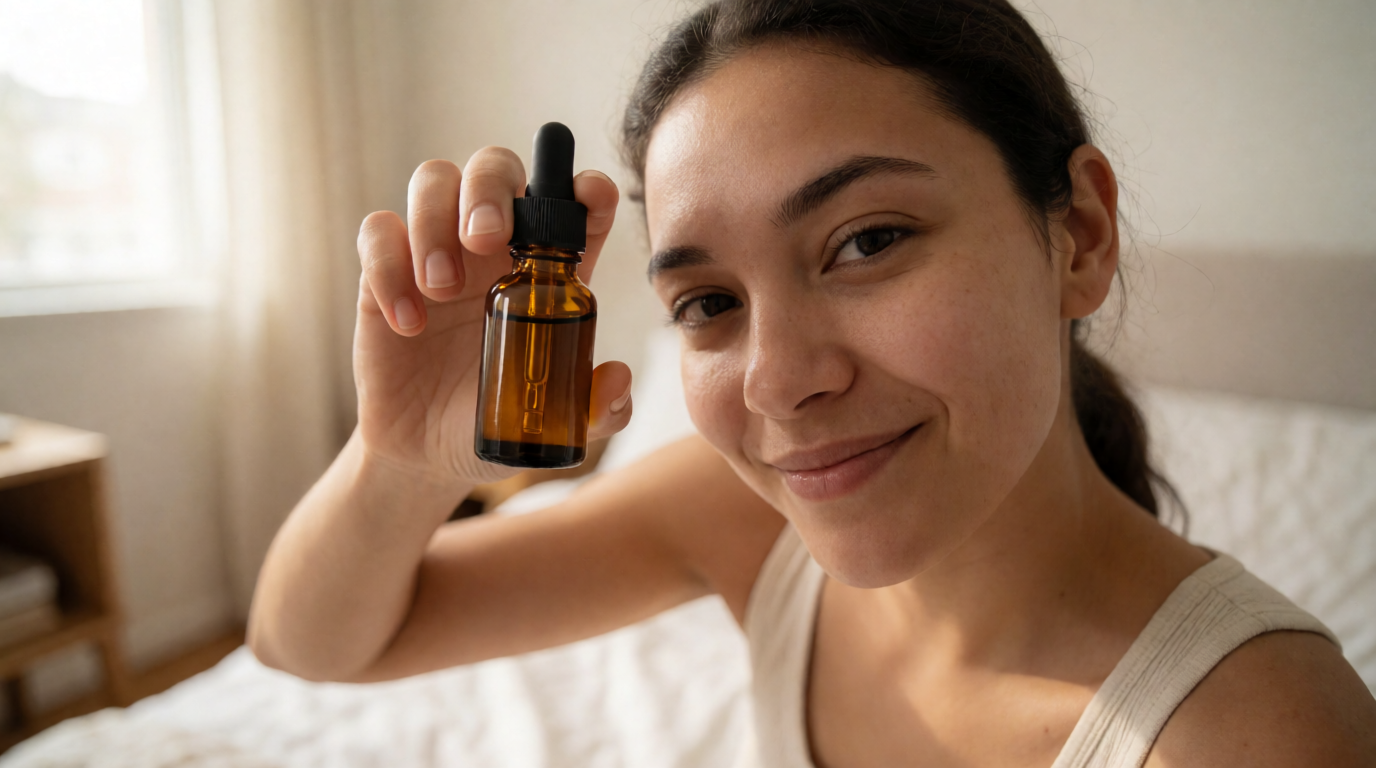
AI ads are paid ads made or modified with generative image, video, or audio tools. These tools can produce product imagery, synthetic performances, and audiovisual variations. In a paired field test, AI creative recorded a 0.76% click-through rate against 0.65% for human creative. A separate set of conversion tests found the advantage reversing as order value rose, with an 8% drop above $100. This article shows our seven-step method for matching the creative mix to the offer, preserving product recognition, and producing ads with variables you can test separately.
A generator creates value when the team controls campaign strategy, approved brand assets, and test design. The result is a controlled batch in which product proof stays fixed and performance differences can be traced to each variation.
Key takeaways
- AI ads win attention easily and earn trust conditionally: in field data AI creative out-clicked human ads 0.76% to 0.65% while conversion fell 8% above $100 order values and 14% above $500, so the method here sizes AI’s role by order value and builds each ad.
- Show the product, outcome, or tension in the first second so viewers immediately understand the ad.
- Use one approved reference set across the batch so buyers see a consistent, recognizable product.
- Change one variable per test batch to identify what made the winning ad perform.
1. Set an AOV-Based Creative Mix
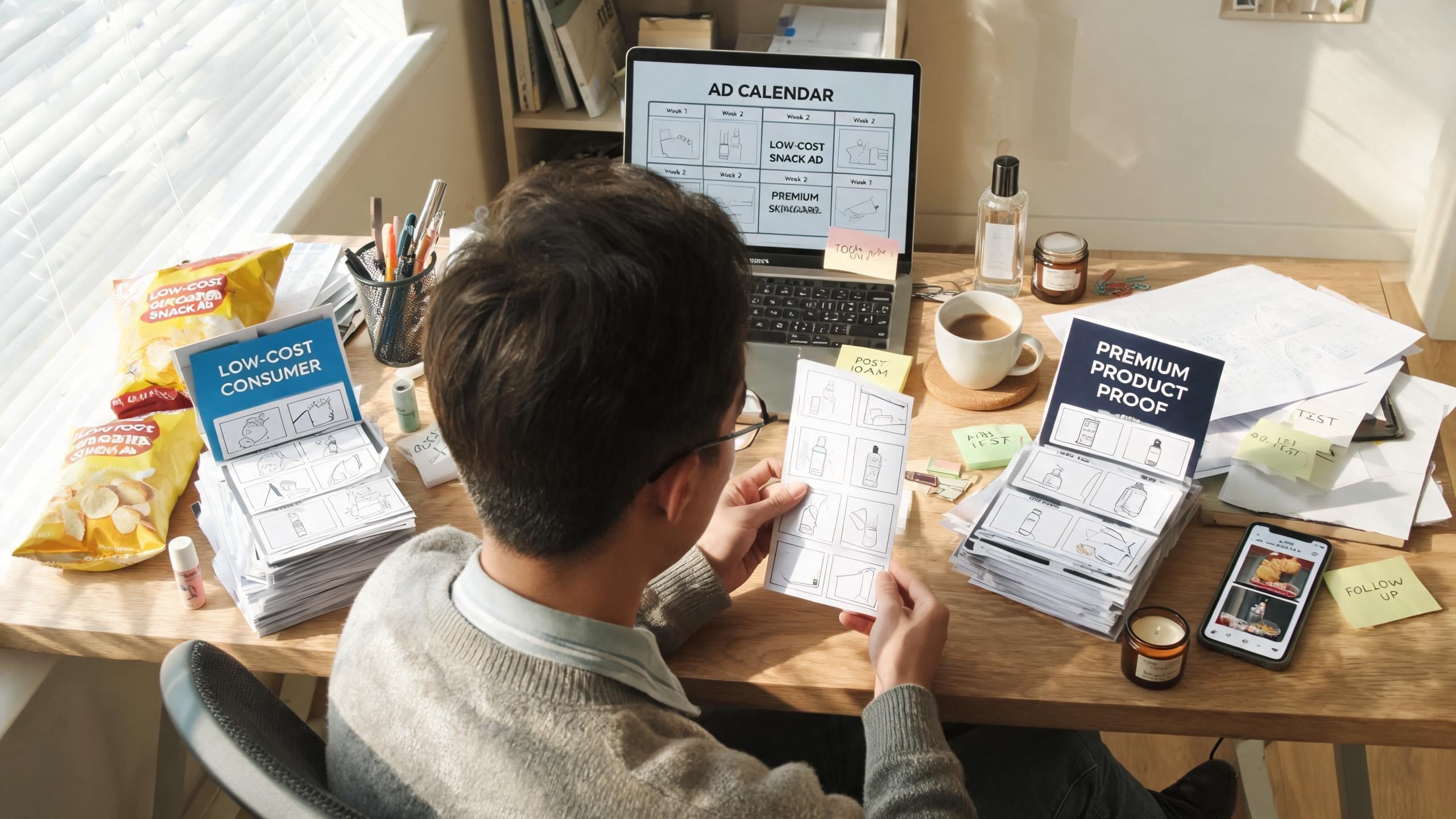
Average order value, or AOV, helps determine how much synthetic material an ad can carry without weakening buyer confidence. The price and complexity of the decision set the working mode.
| Offer and buyer risk | Working mode | Keep real | Use AI for |
|---|---|---|---|
| Low-priced consumer product | Fully generated prospecting | Accurate product details and claims | Concepts, environments, performers, voice, and variations |
| Product above $100 AOV | AI environments around real products | Product footage, demonstrations, reviews, and evidence | Backgrounds, scene extensions, editing, and variant production |
| Offer above $500 or complex B2B sale | Real proof with AI-assisted production | People, testimony, demonstrations, case evidence, and product behavior | Storyboards, cleanup, localization, cutdowns, and visual support |
Conversion tests by order value found AI creative converting 8% worse above $100 AOV and 14% worse above $500, and producing 18% fewer qualified opportunities in B2B campaigns.
Performance tracking across accounts places AI and human creative near conversion parity at the low-AOV end, with the results diverging as order value climbs.
FULLBEAUTY Brands shows how a mixed approach can work. The company replaced white product backgrounds with AI lifestyle environments while keeping the products real. It reported a 45% increase in return on ad spend and a 22% increase in conversion.
Our decision rule is based on buyer risk. Low-risk prospecting can support more generation. Expensive products and complex sales need real product behavior, credible people, and verifiable evidence.
Gotcha: A higher click-through rate does not prove that the resulting customers or sales opportunities have equal value.
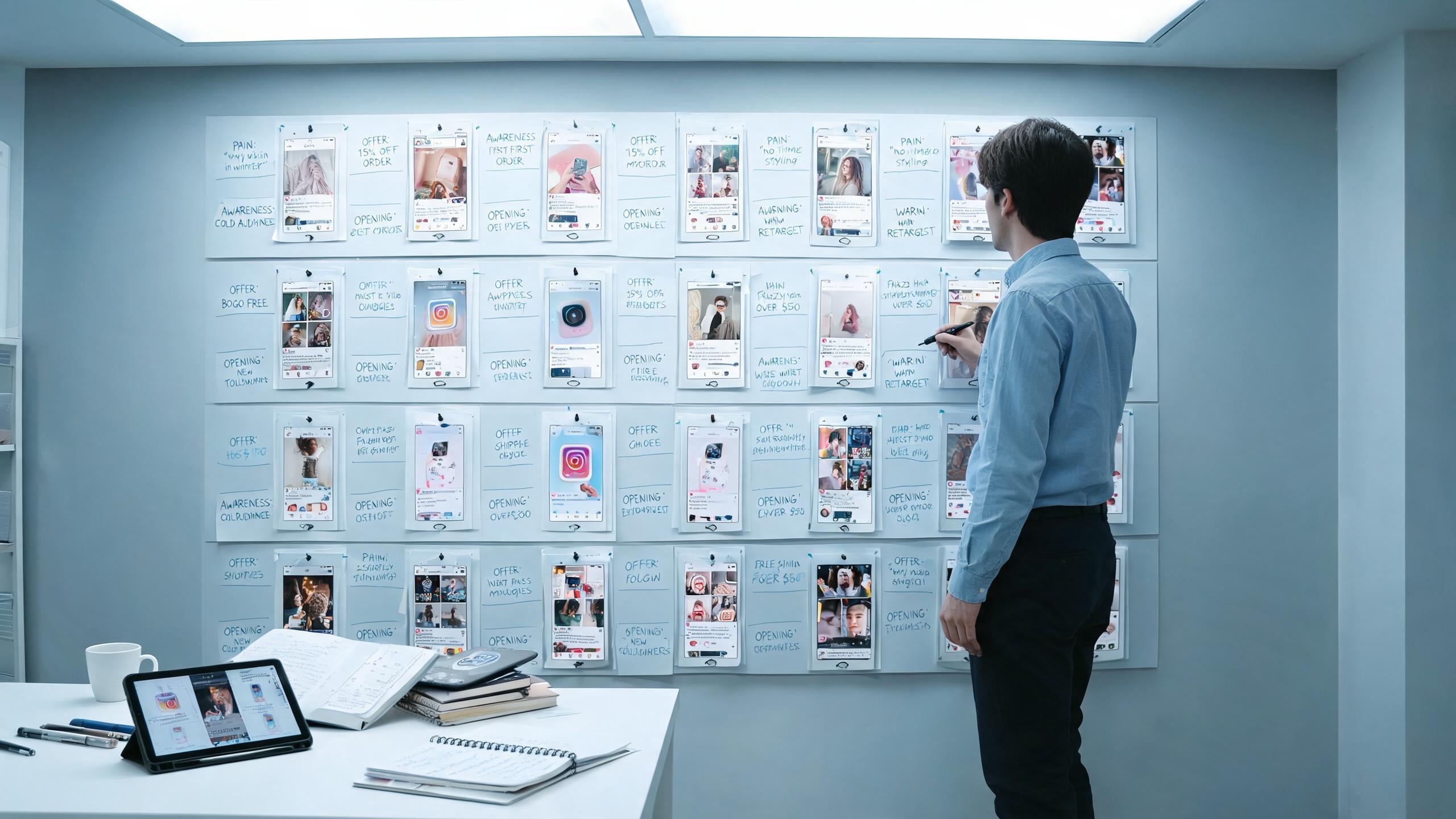
2. Build a Longevity-First Swipe File
A swipe file gives you useful starting points when it records ads that survived sustained delivery. Treat ads active for 30 to 90 days or longer as stronger clues than recent launches, which may only reflect launch spending.
- Search direct competitors first, then add adjacent brands that sell to the same buyer problem.
- Filter by the relevant country and placement. Record the start date, then summarize whom the offer targets and how the creative makes its case.
- Rank ads by longevity. Group the durable references by offer and buyer problem.
Ad libraries expose creative and run dates. Conversion rate and return on ad spend remain unknown, so longevity is only a proxy for performance.
The finished swipe file should contain a small set of references with clear reasons for inclusion. A folder of attractive screenshots does not record the offer, argument, or evidence that may have kept an ad running.
Gotcha: Heavy launch spending can make a new ad appear repeatedly before it has proved durable.
3. Rebuild the Persuasion Structure
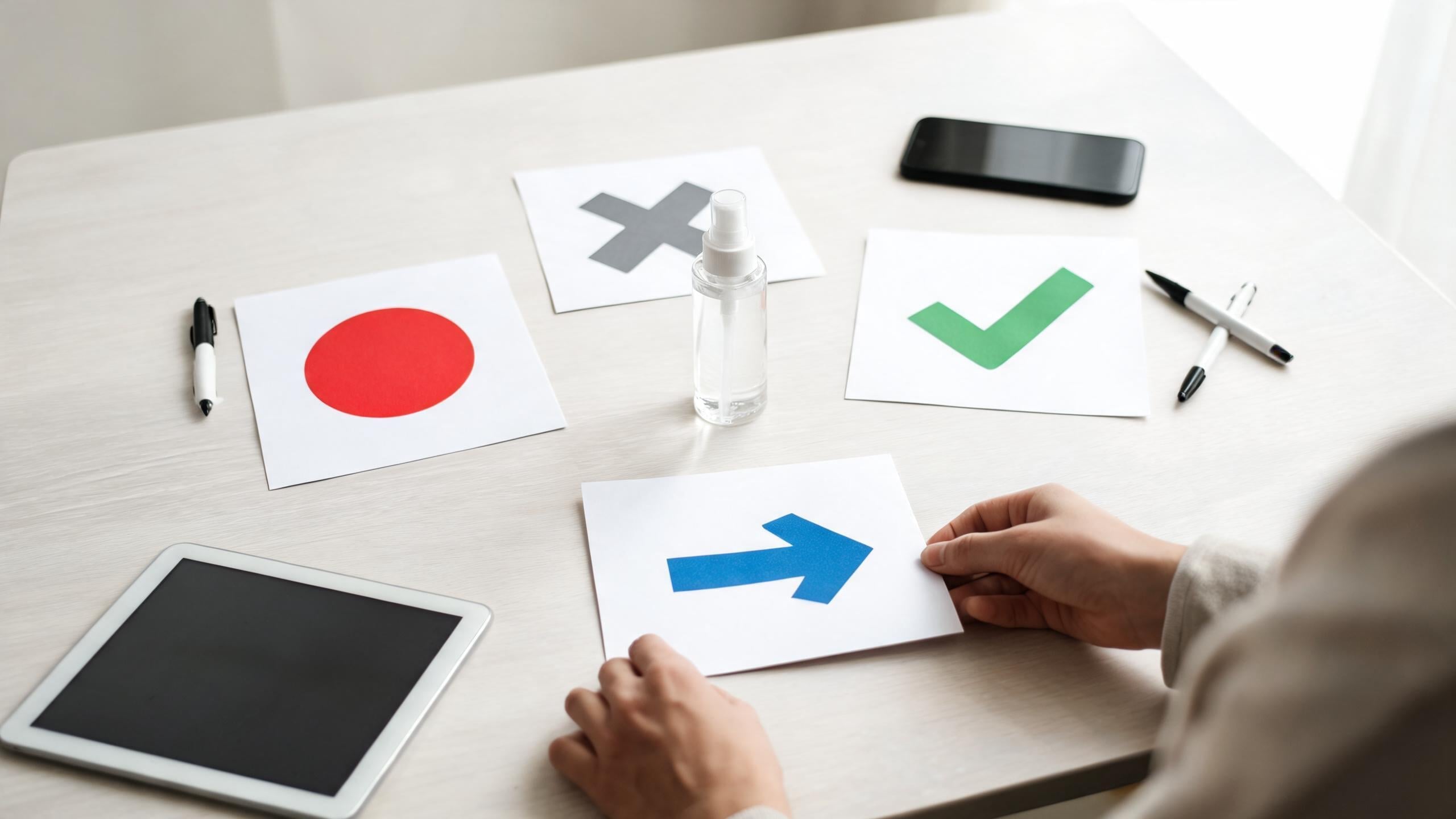
A durable reference helps when you extract the sequence that moves the viewer toward action. A review of 527 AI-classified video ad segments found Hook, Problem, Benefit, CTA to be the dominant arc, with hooks accounting for 28.3% of all segments.
Before drafting, map the reference to the worksheet below:
| Beat | Question to answer |
|---|---|
| Hook | What makes the intended buyer stop? |
| Problem | Which specific frustration or cost appears? |
| Benefit | What changes after the product enters? |
| Proof | Which demonstration, result, review, or fact supports the claim? |
| CTA | What action follows, and what does the buyer receive? |
Describe what each beat accomplishes without carrying over the source’s wording or brand identity. Transfer the causal argument to your own audience: this buyer has this problem, this product produces this outcome, and this evidence supports the claim.
For example, a reference might show a leak, the resulting cleanup, and a cap sealing shut. A new ad can retain that progression while using your product, supporting evidence, and replacement offer.
Gotcha: Copying surface details can remove the sequence that carried the viewer from the problem to the action.
Create an approved product reference on Krea
Generate the product still once in Krea Image, then anchor every scene and variant to it.
Open Krea Image4. Write a Specific First-Second Promise
The opening second needs to identify a product, outcome, or unresolved tension. Meta Creative Shop analyzed 2.3 million video ads and found that ads holding attention for 1.5 seconds were seven times more likely to reach completion.
An analysis of 50 million AI-generated ads found that Specific Outcome, POV Realism, and Unpopular Opinion hooks produced 35% to 45% higher engagement than generic openers.
- Specific Outcome: State a measurable result or visible change.
- POV Realism: Put the viewer inside a recognizable use moment.
- Unpopular Opinion: Challenge a belief that affects the purchase.
Keep the offer and audience fixed while sharpening the promise:
| Generic opener | Specific first-second hook |
|---|---|
| “Stay hydrated all day.” | “This bottle kept ice through my eight-hour shift.” |
| “Meet your new gym bottle.” | “POV: your bottle stops leaking inside your gym bag.” |
| “A better bottle is here.” | “Unpopular opinion: a straw lid makes lifting days messier.” |
| “Get clearer skin.” | “My redness looked lower after 14 days with this routine.” |
For the leak hook, a shot of the sealed bottle inside the bag makes the promise immediately visible. Show the sealed bottle inside the bag for the leak hook, or show the relevant skin area for the 14-day claim. Visual novelty without an offer-related promise may earn attention without creating consideration.
Gotcha: An unusual synthetic scene is not a useful hook when the viewer cannot identify the product, outcome, or tension.
5. Preserve Trust Cues During Generation
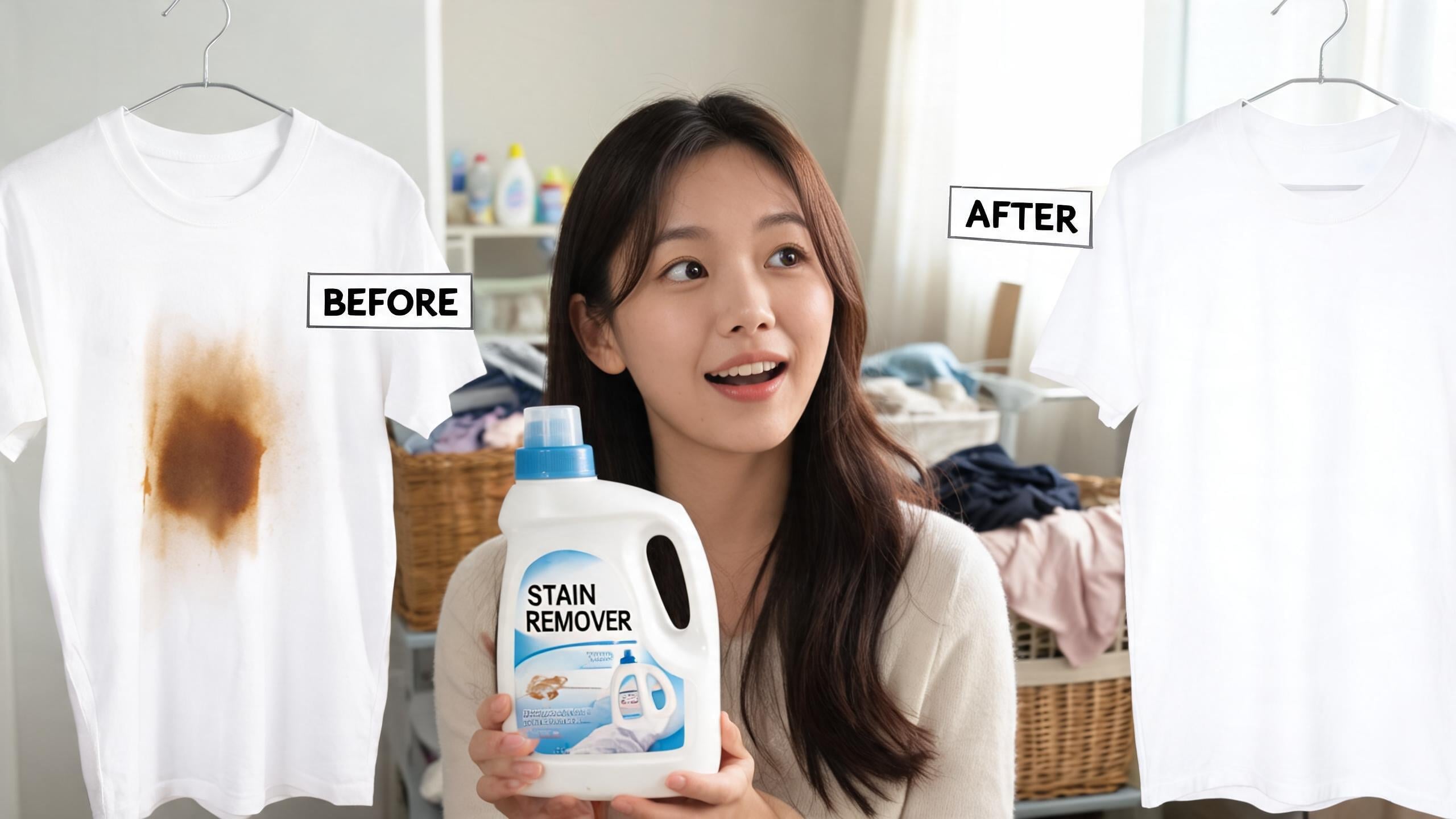
AI UGC performs when the product and person behave plausibly. Published benchmarks put Meta click-through rates for well-scripted AI UGC that avoids recognizable AI tells at 1.5% to 3%, with a 2026 median of 1.8% for lifestyle AI UGC.
Review every generated shot against the approved product reference:
- The approved reference makes product-shape drift visible across generated frames.
- Hands maintain a natural grip and believable contact.
- Reflections and shadows follow the scene lighting.
Then check the demonstration and performer:
- Speech stays synchronized with the face and body motion.
- The claimed benefit appears through a visible demonstration.
- High-risk claims use real evidence from the product or customer.
Disclosure can affect performance as well as compliance. An NYU and Emory field study on the Google Display Network found that fully generated ads gained 19% CTR over the human control. Adding an “AI-generated” disclosure reduced CTR by about 31.5%.
New York’s synthetic-performer disclosure law applies from June 2026. EU AI Act transparency obligations apply from August 2026. Teams using synthetic people need to assess the relevant requirements for each campaign and market.
A product-only generated scene avoids the credibility problem created by synthetic testimony. Product-only scenes keep attention on operation and results when a synthetic performer contributes no evidence.
Gotcha: Synthetic testimony asks viewers to trust a person who never used the product.
6. Lock the Brand Before Producing Variants
An approved reference still gives every video variant the same product shape and art direction. Krea 2 style references can retain palette, texture, and lighting across a batch. That workflow runs at about $0.035 per image.
Build the source assets first:
- Generate product and style stills in Krea Image.
- Select one still that preserves the approved product geometry.
- Write the eight-second beat around actions the reference can support.
Then produce and inspect the video:
- Use the vertical Ad Creator or AI UGC nodes to compose the ad.
- After applying image-to-video motion, inspect the product, scene, and soundtrack for continuity.
- Variants built from the same approved reference retain consistent product details and art direction.
Kling Motion Control applies a motion reference to a new subject or product. For this reference-led sequence, Krea is the best place to combine image and video work in one browser workflow.

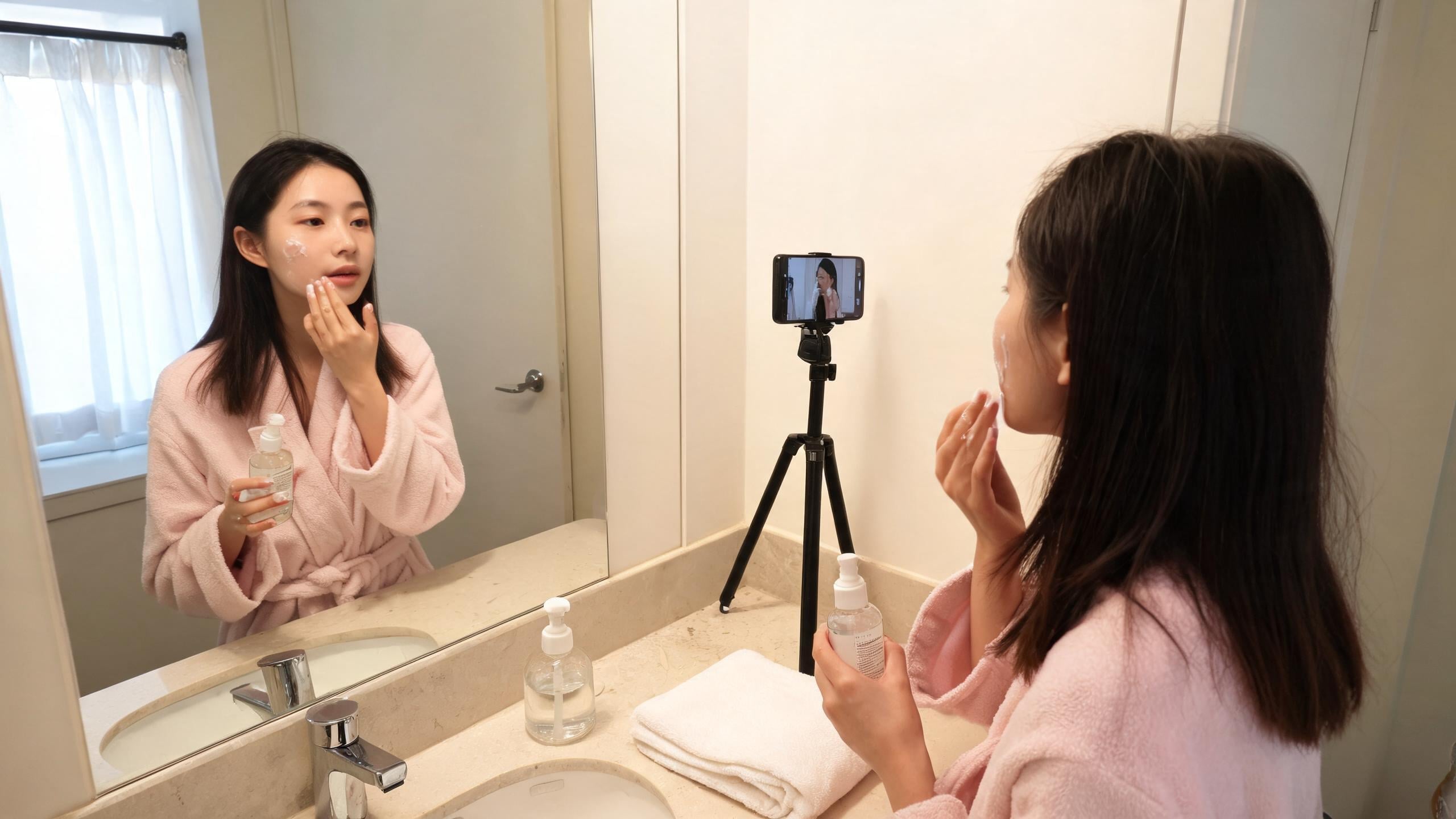
We generated one sage-green insulated bottle still in Krea for $0.03. That still became the product reference for an eight-second vertical gym UGC beat generated with Seedance 2.5, including sound in the same pass.
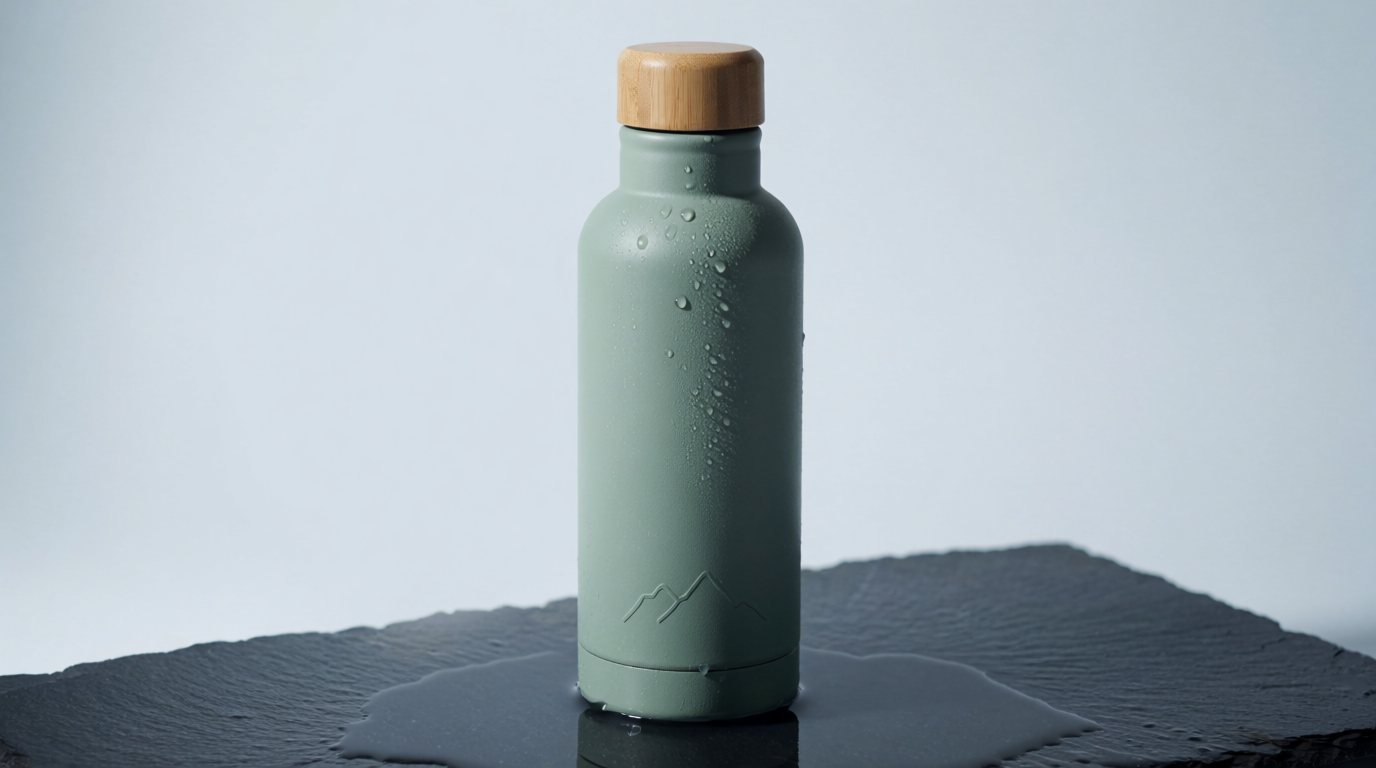
Our recorded test notes tracked the bag entry and cap click, the drink, and the product-to-camera finish. The bottle remained recognizable through all four because the still supplied the product reference.
Gotcha: Prompting every variant from zero removes the shared reference that keeps the product and art direction consistent.
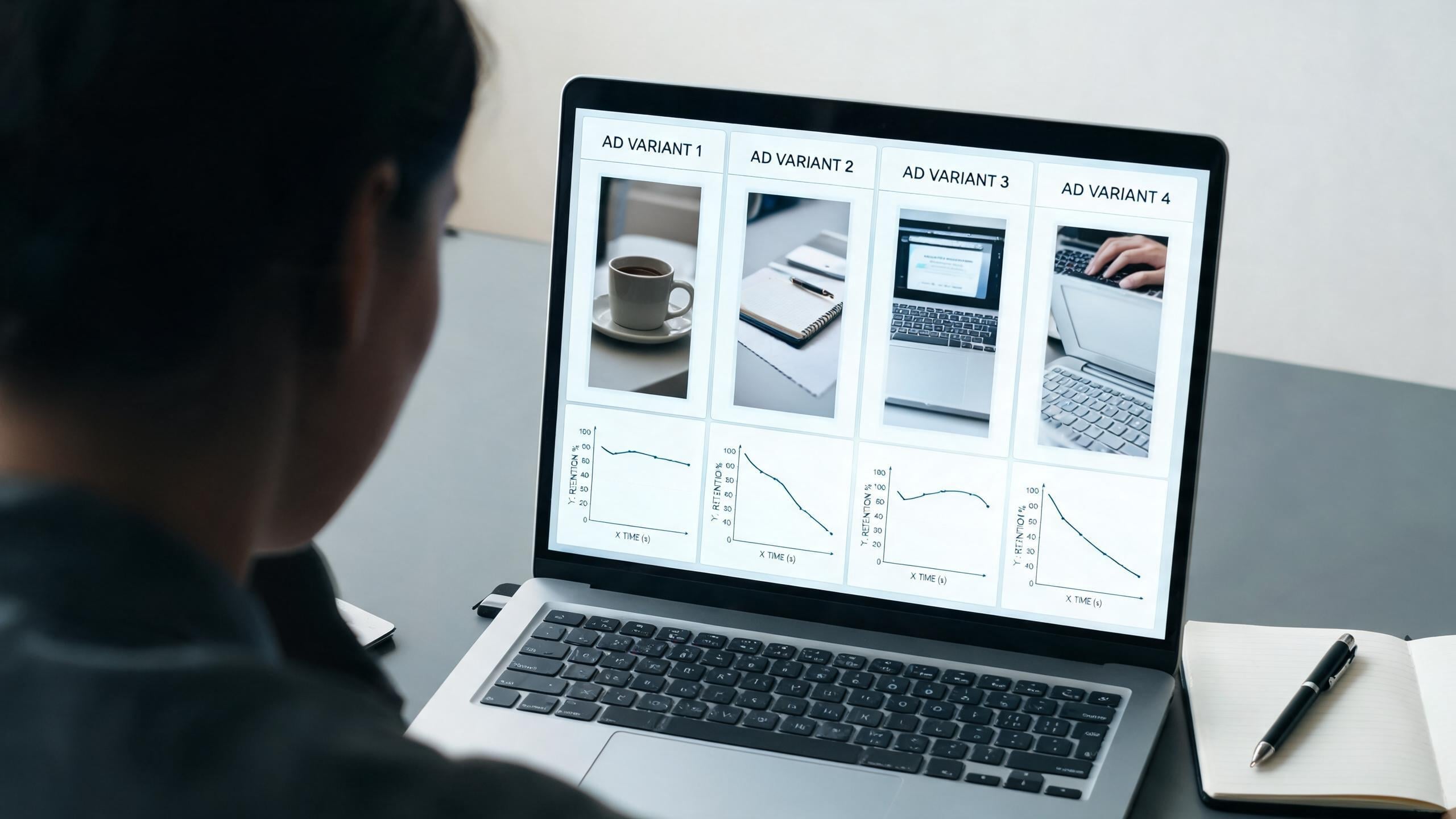
7. Run a Single-Variable Learning Loop
A controlled batch tells you which change caused the result. Common Meta benchmarks place a strong hook rate at 30% to 35% or higher, with 40% or higher considered elite.
Set up the first test:
- Keep the audience setup, persuasive core, and production references fixed.
- Create variants that change only the opening hook.
- Measure the percentage of impressions that reach the hook-rate cutoff used in your account.
Continue the loop:
- Promote the hook that wins after sufficient delivery.
- Keep that hook fixed and change one new variable.
- Record the result before producing the next batch.
Meta’s AdLlama experiment ran for 10 weeks across roughly 35,000 advertisers and 640,000 ad variations. It produced a 6.7% CTR increase over the supervised baseline, showing the value of learning across a large set of controlled variations.
Organize the batch log into three field groups:
- Identity: variant ID, changed variable, and promotion decision.
- Delivery: spend, impressions, and hook rate.
- Outcome: CTR, conversion rate, and qualified-opportunity rate where relevant.
CTR provides an early signal. For high-risk offers, downstream conversion shows whether additional clicks came from valuable buyers.
Gotcha: Changing several variables together prevents the team from identifying the cause of a win.
Start With One Offer and One Reference
Choose one offer and classify its buyer risk. Find one long-running ad with a usable structure, then produce a small batch that changes only the first-second hook.
Improvement should appear in sequence: the product remains recognizable, more viewers stay through the opening, and conversion or qualified opportunities rise. Our bottle demo provides the concrete model. One approved still anchored a recognizable eight-second vertical ad while leaving the hook open for testing.
Try it on Krea
Create the first approved product reference, then use it to anchor the scenes and variants that follow.
Next, read the AI in Advertising principles piece for the broader rules governing synthetic creative, proof, and buyer trust.
Sources
- Taboola, sibling-ad study of AI versus human creative (0.76% versus 0.65% click-through).
- Digital Applied, conversion tests by average order value (8% lower above $100, 14% lower above $500) and B2B qualified-opportunity data (18% fewer).
- AdBeacon, field-data tracking of AI versus human creative conversion by order value.
- FULLBEAUTY Brands, reported results from AI lifestyle backgrounds around real products (45% return on ad spend lift, 22% higher conversion).
- AdLibrary creative-strategist playbook, the 30 to 90 day longevity signal in Meta Ad Library.
- Sovran, review of 527 AI-classified video ad segments (Hook, Problem, Benefit, CTA; hooks 28.3%).
- Meta Creative Shop, analysis of 2.3 million video ads (1.5-second attention and completion).
- ugccopilot.ai, analysis of 50 million AI-generated ads (hook types and engagement lift).
- VIDEOAI.ME and ppl.studio, 2026 Meta click-through benchmarks for AI UGC.
- NYU and Emory, field study on the Google Display Network (19% click-through lift, 31.5% drop with disclosure).
- Novoads, per-image cost of the Krea 2 style-reference workflow.
- Motion Creative benchmarks, via Selzee, Meta hook-rate thresholds.
- Meta, AdLlama experiment (10 weeks, about 35,000 advertisers, 640,000 variations, 6.7% click-through lift).
Related reading
- How to Make AI Ads (and UGC Ads) for Free in 2026
- Seedance 2.5 Makes a Full 30-Second UGC Ad in One Shot (2026 Guide)
- Top 6 AI Video Models for Ecommerce Ads in 2026
Frequently asked questions
What does “AI ads that actually sell” mean in 2026?
How do I decide how much of my creative should be synthetic (vs. real product)?
Does higher CTR guarantee the ad will convert better?
What’s the best way to use a swipe file for AI ad creation?
How should I structure an AI ad so it converts (instead of just looking good)?
Build your ad batch on Krea
One approved product reference, one script, and Seedance 2.5 for the vertical beat.
Try Krea Video