Seedance 2.5 and MiniMax H3 are two of the newest reference-driven video models on Krea. Both take a start and end frame, accept image, video and audio references, and generate audio in the same pass. Where they split is length, reference capacity and price: Seedance 2.5 runs one take up to 30 seconds with up to 50 references, while the H3 family stops at 15 seconds with up to 15 references but costs far less per second, especially H3 Max.
In our matched tests, both models spoke a scripted line word for word. Seedance 2.5 followed a directional action prompt that H3 Max did not, and gave the more cinematic speaking shot. H3 Max gave a busier, documentary-style frame at a fraction of the cost.
How we tested
In October 2026 we ran the same two prompts through Seedance 2.5 (720p) and MiniMax H3 Max (768p) on Krea, at 8 seconds, 16:9, with the same seed. We switched prompt rewriting off on both models (Seedance prompt enhancement off, H3 Max prompt expansion set to disabled), so each model saw exactly the prompt below. Each prompt ran once, so treat the results as a snapshot, not a benchmark: any video model varies from run to run.
We checked dialogue by transcribing each clip with Whisper, and measured the loudness of each delivered audio mix with ffmpeg. H3 caps at 15 seconds, so our 20-second one-take test only appears in the Seedance 2.5 vs Wan 3.0 comparison.
Key takeaways
- Seedance 2.5 generates 4 to 30 seconds at 480p, 720p or 1080p, with up to 30 image, 10 video and 10 audio references and same-pass audio.
- MiniMax H3 is MiniMax’s frontier 2K model: 5 to 15 seconds, up to 9 image, 3 video and 3 audio references, and prompts up to 7,000 characters.
- H3 Max is a post-trained H3 with stronger prompt adherence and better aesthetics at 480p, 768p or 1080p, and the cheapest of the three per second. Its clips came back with native audio in our tests.
- Dialogue: both models spoke the scripted line exactly. Seedance framed it as a moody, cinematic close shot; H3 Max as a wide, busy market stall.
- Action: Seedance 2.5 kept the prompted left-to-right travel over the stairs. H3 Max landed the trick but sent the rider toward camera instead.
- Pick Seedance 2.5 for long single takes, reference-heavy scenes and directed motion. Pick H3 or H3 Max for shorter shots where cost per attempt matters most.
Seedance 2.5 vs MiniMax H3 at a glance
| Dimension | Seedance 2.5 | MiniMax H3 | MiniMax H3 Max |
|---|---|---|---|
| Clip length | 4–30 seconds | 5–15 seconds | 5–15 seconds |
| Resolution | 480p, 720p, 1080p | 2K | 480p, 768p, 1080p |
| Aspect ratios | 16:9, 4:3, 1:1, 3:4, 9:16, 21:9 | Adaptive, 21:9, 16:9, 4:3, 1:1, 3:4, 9:16 | 21:9, 16:9, 4:3, 1:1, 3:4, 9:16 |
| Image references | Up to 30 | Up to 9 | Up to 9 |
| Video references | Up to 10 | Up to 3 (15 seconds total) | Up to 3 (15 seconds total) |
| Audio references | Up to 10 | Up to 3 | Up to 3 |
| Start and end frame | Yes | Yes | Yes |
| Native audio | Yes, every clip | Not tested | Yes (verified in our clips) |
| Extras | Draft mode, extend, reframe, effects, API prompt enhancement | 7,000-character prompts | Prompt expansion modes (off, fast, balanced, quality) |
| Approx. cost, 5s clip | ~856 CU at 720p | ~481 CU | ~207 CU at 768p, ~415 CU at 1080p |
| Our tests | Won the action shot and the cinematic look | Not tested | Spoke the line, cheapest per attempt |
Compute-unit (CU) figures are approximate and come from Krea’s billing rates. The generate button in Krea always shows the exact cost before you commit.
Try Seedance 2.5 on Krea
Generate up to 30 seconds in one take, with native audio and up to 50 references.
Open Seedance 2.5Test 1: the speaking shot, where both models nail the line
The first prompt asks for a scripted line to camera, then a physical beat with fire:
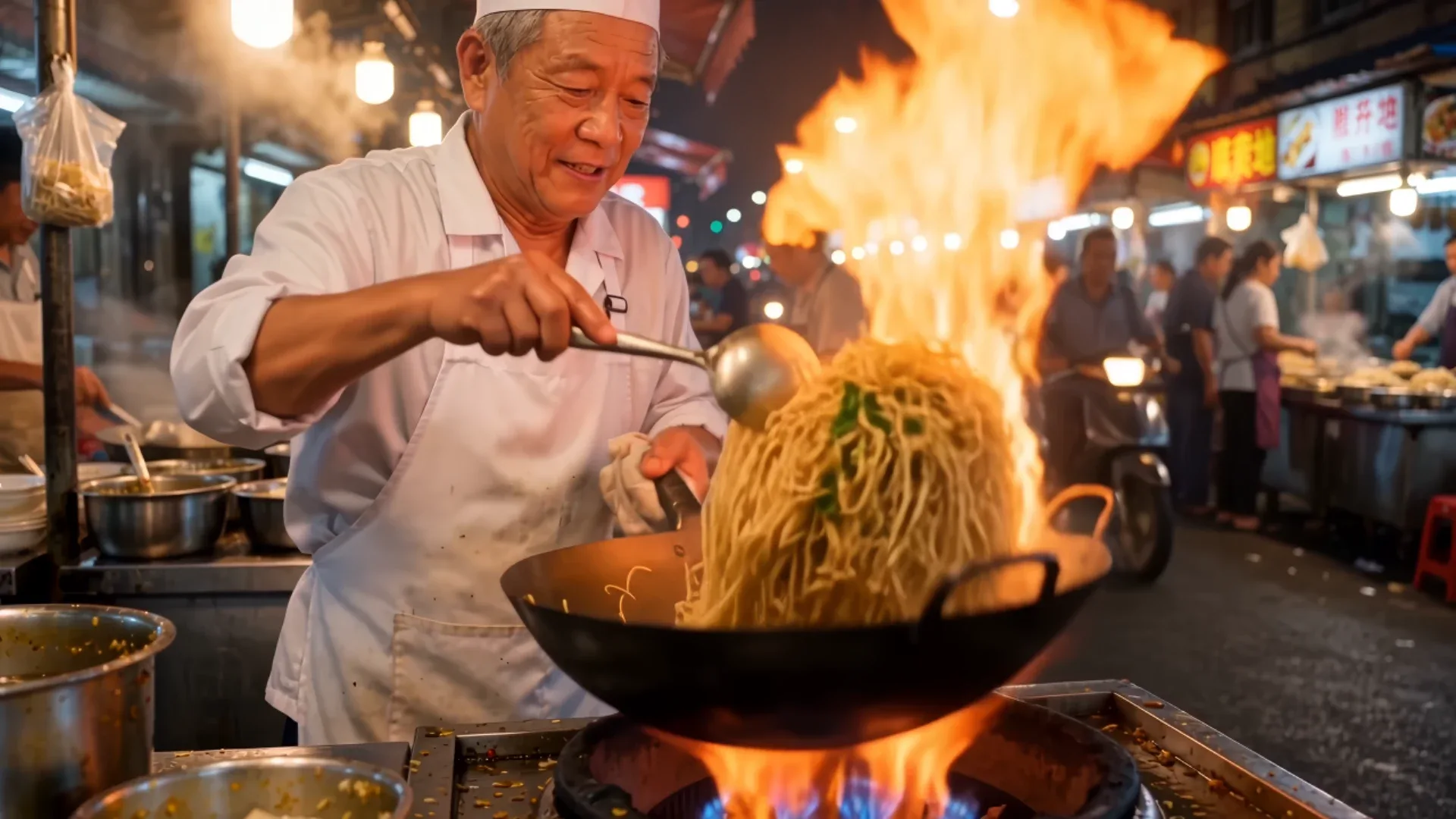
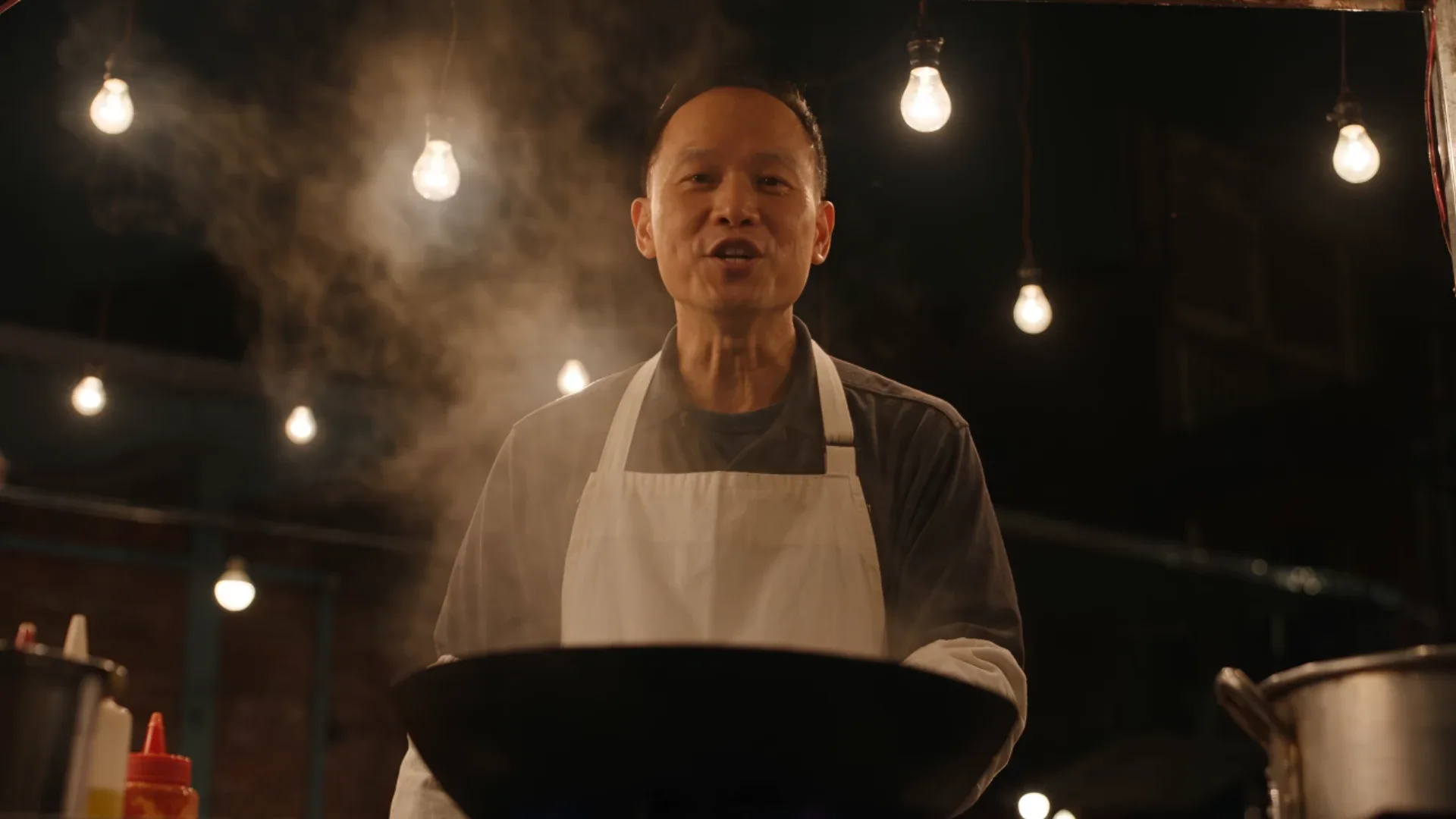
Medium close-up, 50mm. A night-market noodle vendor in a white apron stands behind a steaming wok under bare hanging bulbs. He looks into the camera and says: "Thirty years. Same pan, same recipe." Then he tosses the noodles high and flames jump up from the wok. Camera: gentle living handheld that barely breathes, slight push-in. Audio: his voice, sizzling oil, crowd chatter, distant scooters. Photorealistic, warm practical light.Both models got the dialogue right. Whisper transcribed both clips as “30 years, same pan, same recipe,” with no dropped or invented words.
Seedance 2.5 reads the prompt as a portrait. The camera sits low behind the wok, the vendor looks straight down the lens, and the background falls away into hanging bulbs and drifting steam. It is the more cinematic frame of the two. It also skips the fire: the shot ends on a big noodle toss toward camera, but no flames rise from the wok.
H3 Max reads the same prompt as documentary coverage. It frames the whole stall, with signage, other vendors, scooters and customers behind him. The vendor mostly looks down at his work rather than into the lens, and the fire arrives as a small flame at the very end rather than the high toss the prompt describes.
On audio, the Seedance mix measured -23.4 LUFS against -25.2 LUFS for H3 Max, close enough that neither is meaningfully louder. Seedance’s clip took 3 minutes 57 seconds to render on Krea.
Verdict: Seedance 2.5, on look and direct address. Neither model fully delivered the fire beat, and if you want a busy, lived-in establishing frame, H3 Max’s take is arguably the more useful one.
Test 2: directed action, where Seedance follows the trajectory
The second prompt tests motion that has to travel in a specific direction, a weak spot for most video models:
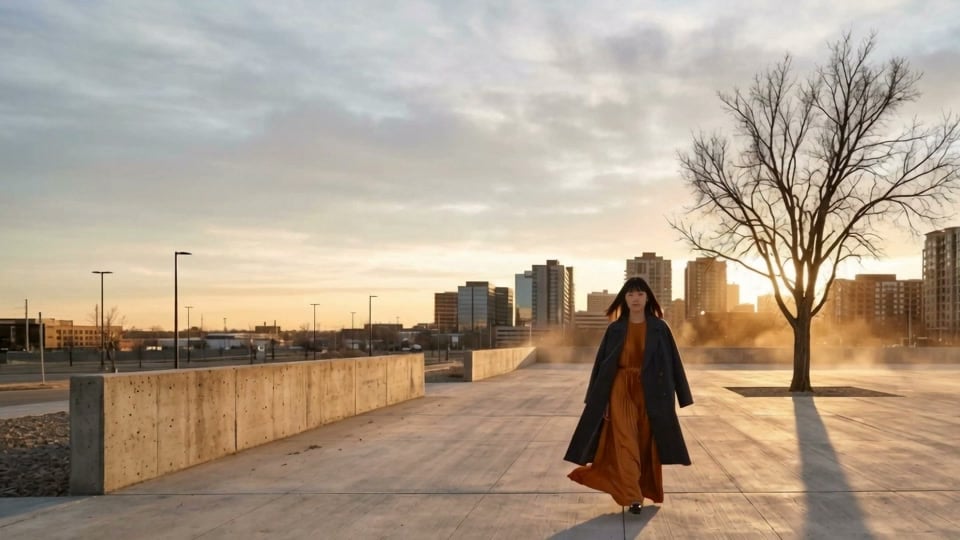
Low wide shot, 24mm. A skateboarder in a red hoodie rolls from frame-left toward a set of five concrete stairs in an empty plaza at golden hour, pops an ollie and travels three meters through the air over the stairs, lands on the flat ground with the board flexing and grit spraying from the wheels, then rides out to frame-right. Camera: tracking left to right at natural realtime speed, no slow motion. Audio: wheels rolling on concrete, the pop of the tail, the slap of the landing, distant birds.Seedance 2.5 kept the geography. The rider enters from frame-left, ollies across the stairs, lands with a puff of dust and grit, and rides out to frame-right, all in low golden-hour sun. The flaw is framing: the camera sits so low that the rider’s head and upper body leave the top of the frame for part of the clip.
H3 Max landed a clean trick in good golden-hour light, but not the one we described. The rider starts at the top of the stairs, comes toward the camera, ollies down the set and rides toward the lens. It is a perfectly usable skate shot, just not this prompt.
Loudness: -19.9 LUFS for Seedance and -22.7 LUFS for H3 Max. Seedance rendered in 4 minutes 24 seconds.
Verdict: Seedance 2.5. When a shot has to move a subject from one side of the frame to the other, Seedance followed the direction and H3 Max didn’t. If you only need “a skater does a trick,” either model gets there.
Clip length: Seedance 2.5 doubles the ceiling
Seedance 2.5 accepts any duration from 4 to 30 seconds. Every H3 variant accepts 5 to 15 seconds.
That gap matters for anything built as one continuous moment: a 20-second product reveal, a walk-and-talk, a full UGC ad read. On H3 those become two clips and a cut. On Seedance 2.5 they stay in one generation, so lighting, wardrobe and camera path carry through without a seam. In our 20-second test against Wan 3.0, Seedance held a three-beat scene as one take with zero detected cuts.
If your edit is already built from short shots, the ceiling barely matters. Most social cuts and inserts live under 15 seconds, and both families cover that range.
Resolution: H3 starts higher, Seedance and H3 Max meet at 1080p
MiniMax describes H3 as a 2K model, so it renders at a higher base resolution than either alternative. H3 Max and Seedance 2.5 both top out at 1080p, with cheaper lower tiers (768p for H3 Max, 720p for Seedance 2.5) and a 480p tier for drafts. Our H3 Max clips at the 768p tier came back at 1344×768.
For 4K delivery on any of them, generate at the highest tier you need and run the clip through Krea’s video upscaler.
References: Seedance 2.5 holds far more of them
This is the widest gap in the comparison. Seedance 2.5 takes up to 30 image, 10 video and 10 audio references, 50 in total. H3 and H3 Max take 9 images, 3 videos (capped at 15 seconds of combined reference footage) and 3 audio files.
In practice:
- A multi-character scene with separate face, wardrobe and prop references for each person fits comfortably in Seedance 2.5 and quickly overflows H3’s nine image slots.
- Brand work that needs a product shot from several angles, a logo, a color reference and a voice track is a Seedance 2.5 job.
- A single character in a single location, guided by two or three references, fits either model.
On base H3, the first five reference images are included in the price and each one after that adds roughly 30 CU, so a full set of nine costs a little more than a lightly referenced clip.
Frame shapes and control
Both families cover the same core shapes, including 21:9 ultrawide and 9:16 vertical. Base H3 adds an adaptive option that follows the shape of your start frame.
Seedance 2.5 adds workflow tools H3 does not list:
- Draft mode renders a fast 480p preview at the 480p rate, so you can check motion and blocking before paying for the full-quality version.
- Extend and reframe continue a clip or change its frame shape.
- Effects apply preset looks and motions.
- Prompt enhancement (an API option) rewrites a short prompt into a fuller Seedance-style brief.
H3 Max answers with its own prompt expansion, in four strengths from off to quality. We ran it with expansion disabled so both models saw the same text; with expansion on, H3 Max rewrites your prompt before generating, which can change how literally it follows direction. Base H3 accepts prompts up to 7,000 characters, useful for dense, shot-by-shot direction.
Cost: H3 Max is the budget pick
Approximate Krea compute-unit costs per second of output:
| Model | 480p | 720p / 768p | 1080p | Other |
|---|---|---|---|---|
| Seedance 2.5 | ~76 CU | ~171 CU | ~421 CU | — |
| MiniMax H3 | — | — | — | ~96 CU per billable second at 2K |
| H3 Max | ~26 CU | ~41 CU (768p) | ~83 CU | Small surcharge for references |
| H3 Max Turbo | ~19 CU | ~30 CU (768p) | ~59 CU | — |
Our two 8-second test clips put that into numbers. Each Seedance 2.5 clip at 720p cost about 1,370 CU; each H3 Max clip at 768p cost about 330 CU. That’s roughly four H3 Max attempts for the price of one Seedance take.
That makes the H3 family the natural place to explore ideas in volume, and Seedance 2.5 the place to spend on a hero take. For a full breakdown of Seedance 2.5 pricing, see what a Seedance 2.5 video actually costs.
Choose Seedance 2.5 if
- One continuous take needs to run longer than 15 seconds.
- The subject has to travel a specific path across the frame, as in our skate test.
- You want a cinematic, direct-to-camera speaking shot.
- The scene needs more than nine image references or more than three video or audio references.
- You want draft mode, extend, reframe or effects in the same model.
Choose MiniMax H3 or H3 Max if
- Your shots fit within 15 seconds.
- You want the lowest cost per second for exploration or high-volume variants (H3 Max, or H3 Max Turbo for drafts).
- A busy, documentary-style frame suits the shot, as in our vendor test.
- You want a 2K base render without upscaling (H3).
- You write long, shot-by-shot prompts and want room for up to 7,000 characters.
Full specs live on the MiniMax H3 and MiniMax H3 Max model pages.
A practical workflow is to explore with H3 Max Turbo or H3 Max, then move the winning idea to Seedance 2.5 when it needs a longer take, more references or tighter motion direction. All of these models run in the same Krea video workspace, so switching costs nothing but a click.
Related reading
- How to Use Seedance 2.5 on Krea
- Seedance 2.5 vs Wan 3.0
- Seedance 2.5 Pricing: What a Video Costs
- Seedance 2.5 Prompt Guide
- Seedance 2.5 Draft Mode, Extend and Reframe
- Seedance 2.5 vs Kling 3.0
- Seedance 2.5 vs Veo 3.1
Frequently asked questions
Is Seedance 2.5 better than MiniMax H3?
Can MiniMax H3 Max generate dialogue and audio?
Which model followed the action prompt better in your test?
What is the difference between MiniMax H3 and H3 Max?
Which is cheaper, Seedance 2.5 or MiniMax H3 Max?
How many references can each model use?
Compare Seedance 2.5 and MiniMax H3 on Krea
Both model families sit in one video workspace, so you can run the same prompt through each in minutes.
Try Krea Video