Seedance 2.5 from ByteDance and Wan 3.0 from Alibaba are two of the models on Krea that reach a full 30 seconds in one generation, both with native audio and image, video and audio references. On paper they look close. Seedance 2.5 accepts several times more references and adds a 21:9 ultrawide frame. Wan 3.0 costs about a third less per second, goes down to 2-second clips and lets you switch audio off.
In our matched tests the split was clear. Wan 3.0 hit the most literal, dramatic version of a prompt (big flames, a high canal reveal) and rendered faster. Seedance 2.5 followed a directed action path that Wan ignored, and was the only one to deliver a 20-second “no cuts” prompt as a true single take.
How we tested
In October 2026 we ran three prompts through Seedance 2.5 and Wan 3.0 on Krea at 720p, 16:9, with the same seed: an 8-second speaking shot, an 8-second action shot and a 20-second three-beat one-take. We switched prompt rewriting off on both (Seedance prompt enhancement off, Wan prompt expansion off) and left Wan’s audio on, so each model saw exactly the prompt below. Each prompt ran once, so treat the results as a snapshot, not a benchmark.
We checked dialogue by transcribing each clip with Whisper, used ffmpeg scene detection to count cuts, and measured the integrated loudness of each delivered audio mix. Render times are Krea job times from submit to finished file.
Key takeaways
- Both models generate up to 30 seconds at 480p, 720p or 1080p, with a start frame, an end frame and native audio.
- Seedance 2.5 takes up to 30 image, 10 video and 10 audio references (50 total), supports 21:9, and adds draft mode, extend, reframe and effects.
- Wan 3.0 takes up to 10 image, 5 video and 5 audio references, starts at 2 seconds, offers an adaptive aspect ratio, and has toggles for audio and prompt expansion.
- Dialogue: both spoke the scripted line word for word. Wan delivered the fire beat Seedance skipped.
- Action: Seedance kept the prompted left-to-right travel; Wan sent the rider toward camera.
- 20-second one-take: Seedance produced zero cuts. Wan inserted a hard cut at 13.6 seconds despite “no cuts,” but delivered the bigger crane reveal.
- Wan 3.0 is cheaper and was faster: roughly 111 compute units per second at 720p against roughly 171 for Seedance 2.5, and its 8-second clips rendered in about half the time.
Seedance 2.5 vs Wan 3.0 at a glance
| Dimension | Seedance 2.5 | Wan 3.0 |
|---|---|---|
| Clip length | 4–30 seconds | 2–30 seconds |
| Resolution | 480p, 720p, 1080p | 480p, 720p, 1080p |
| Aspect ratios | 16:9, 4:3, 1:1, 3:4, 9:16, 21:9 | Adaptive, 16:9, 4:3, 1:1, 3:4, 9:16 |
| Image references | Up to 30 | Up to 10 |
| Video references | Up to 10 | Up to 5 |
| Audio references | Up to 10 | Up to 5 |
| Start and end frame | Yes | Yes |
| Native audio | Always on | On by default, can be turned off |
| Prompt help | Krea prompt enhancement (API option) | Prompt expansion toggle (on by default) |
| Prompt length | No cap listed | Up to 5,000 characters |
| Extras | Draft mode, extend, reframe, effects | Faster Prime variant |
| Approx. cost, 5s at 720p | ~856 CU | ~556 CU |
| Measured render, 8s at 720p | 3m57s–4m24s | 2m06s–2m19s |
| Our tests | Won the action path and the true one-take | Won the literal fire beat and the crane reveal |
Compute-unit (CU) figures are approximate, taken from Krea’s billing rates. The generate button shows the exact cost before every run.
Try Seedance 2.5 on Krea
One take up to 30 seconds, native audio, and up to 50 references in a single generation.
Open Seedance 2.5Test 1: the speaking shot, where Wan brings the fire
The first prompt asks for a scripted line to camera, then a physical beat with flames:
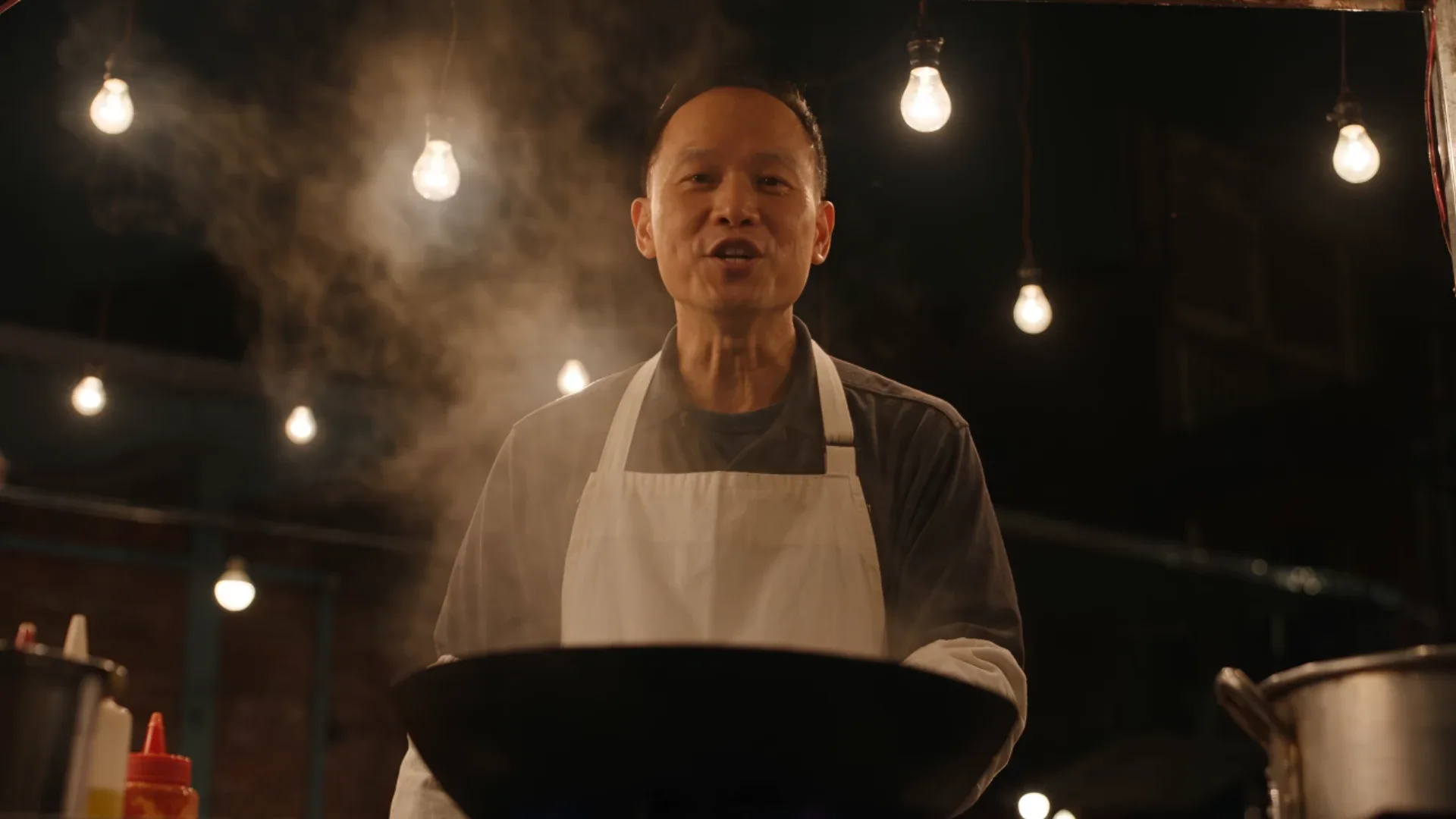
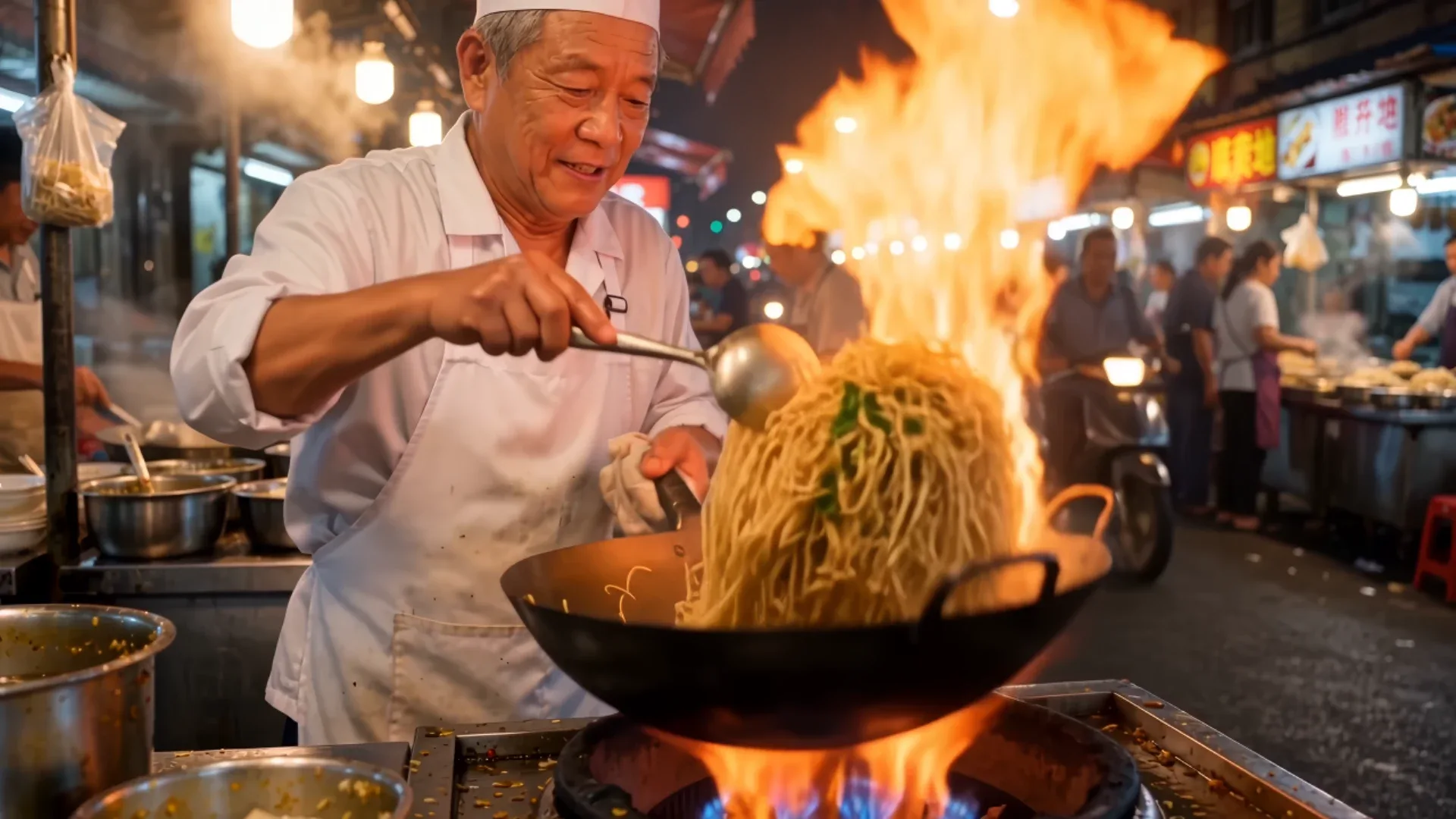
Medium close-up, 50mm. A night-market noodle vendor in a white apron stands behind a steaming wok under bare hanging bulbs. He looks into the camera and says: "Thirty years. Same pan, same recipe." Then he tosses the noodles high and flames jump up from the wok. Camera: gentle living handheld that barely breathes, slight push-in. Audio: his voice, sizzling oil, crowd chatter, distant scooters. Photorealistic, warm practical light.Both models got the line exactly right. Whisper transcribed both clips as “30 years, same pan, same recipe.”
Seedance 2.5 makes it a portrait. The camera sits low behind the wok, the vendor looks straight down the lens, and the background dissolves into hanging bulbs and steam. It reads as the more composed, cinematic frame. But it skips the fire: the clip ends on a big noodle toss toward the camera with no flames.
Wan 3.0 plays it brighter and more literally. The vendor smiles into camera, delivers the line, and in the second half the wok erupts in tall, dramatic flames, exactly as written. It is the closer match to the prompt, set in a busier, well-lit night market.
The audio mixes are very different. Wan’s measured -13.1 LUFS, about 10 dB louder than Seedance’s -23.4 LUFS. Wan’s track lands hot and upfront; Seedance’s sits back like a film mix. Neither is “better” by that number alone, but expect to turn Wan down in an edit. Wan rendered in 2 minutes 6 seconds, Seedance in 3 minutes 57 seconds.
Verdict: Wan 3.0 on prompt fidelity, since it’s the only one that delivered the flames. Seedance 2.5 on look, if you prefer its moodier, direct-address framing.
Test 2: directed action, where Seedance keeps the path
The second prompt asks for a subject to travel a specific path across the frame:
Low wide shot, 24mm. A skateboarder in a red hoodie rolls from frame-left toward a set of five concrete stairs in an empty plaza at golden hour, pops an ollie and travels three meters through the air over the stairs, lands on the flat ground with the board flexing and grit spraying from the wheels, then rides out to frame-right. Camera: tracking left to right at natural realtime speed, no slow motion. Audio: wheels rolling on concrete, the pop of the tail, the slap of the landing, distant birds.Seedance 2.5 followed the geography. The rider enters from frame-left, ollies across the stairs, lands in a puff of dust and grit, and rides out to frame-right in low golden-hour sun. Its weakness is framing: the camera sits so low that the rider’s head and torso leave the top of the frame for part of the clip.
Wan 3.0 delivered a clean, energetic trick, but a different shot. The rider comes toward the camera from the top of the stairs, ollies down the set and lands very close to the lens, in bright late-afternoon light rather than golden hour.
Loudness again split: Wan at -10.9 LUFS, Seedance at -19.9 LUFS. Wan rendered in 2 minutes 19 seconds, Seedance in 4 minutes 24 seconds.
Verdict: Seedance 2.5. When direction and screen geography matter, as in match cuts, product travel or choreography, Seedance did what was asked and Wan didn’t. Wan’s clip is still a strong skate shot if the direction doesn’t matter to you.
Test 3: a 20-second one-take, where only Seedance holds the oner
Both models can run to 30 seconds, so we gave them a 20-second, three-beat scene and asked for no cuts:
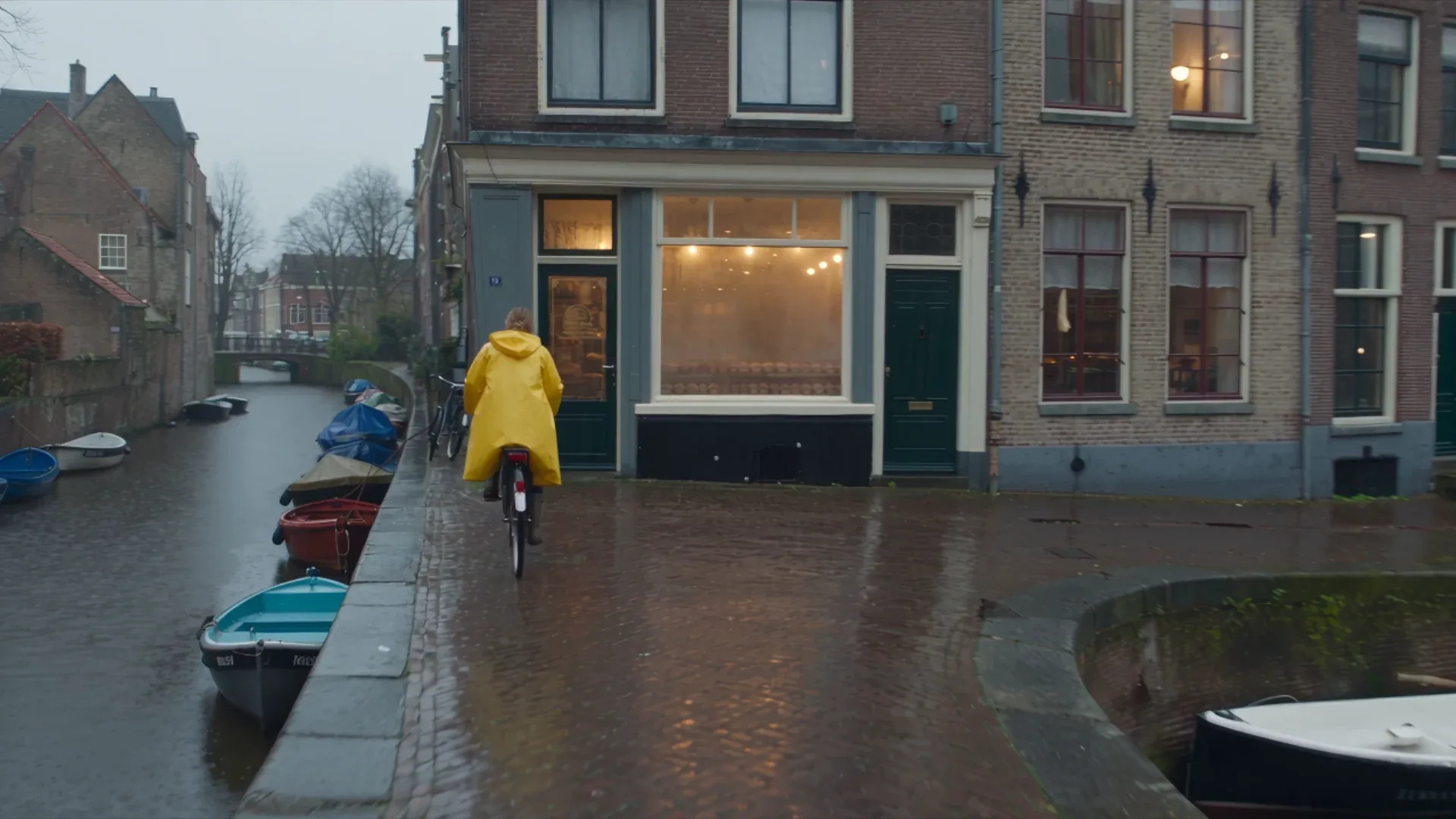
20-second one-take, no cuts. 0-7s: a woman in a yellow raincoat cycles through a narrow rainy cobblestone street lined with old brick houses at dawn, camera tracking beside her at handlebar height. 7-14s: she turns onto a small bridge over a canal and the camera rises in a smooth crane move above her to reveal the canal, moored houseboats and wet rooftops. 14-20s: she stops at a corner bakery, leans her bike against the wall and walks inside as the door bell rings; the camera settles on the steamy bakery window. Audio: rain on cobblestones, bicycle chain ticking, canal water lapping, the door bell, muffled bakery chatter. Photorealistic, natural overcast light.Seedance 2.5 delivered a true single take. Scene detection found zero cuts across all 20 seconds. All three beats land in order: the narrow street, the turn past the canal and moored boats, then the bakery, where she leans the bike on the wall, walks in and the camera ends on the warm window. Two misses: the camera trails behind her instead of riding beside her, and the “crane rise” is a gentle reveal rather than a real lift.
Wan 3.0 hit every beat too, and its middle section is the more spectacular of the two: a high, clear view down the canal over the houseboats, which reads much more like the crane move we asked for. Its ending also lands well, showing her inside the bakery through the glass. But scene detection found a hard cut at 13.6 seconds, straight from the canal view to the bakery exterior, so it isn’t the one-take the prompt specified.
Seedance’s mix measured a quiet -32.8 LUFS, Wan’s -18.4 LUFS. The 20-second renders took 6 minutes 3 seconds on Seedance and 6 minutes 45 seconds on Wan, the only test where Seedance finished first.
Verdict: Seedance 2.5 if the shot must be continuous, since that’s the whole point of a 30-second model. Wan 3.0 if you care more about a dramatic reveal and can live with an edit point.
Length: tied at 30 seconds, Wan goes shorter
Both models reach 30 seconds, which puts them in a small group of video models that can hold a full ad read or a multi-beat scene in one generation. Seedance 2.5 starts at 4 seconds. Wan 3.0 starts at 2, which is handy for very short loops, stingers and transitions where you don’t want to pay for footage you will trim.
References: Seedance 2.5 holds three times as many images
Reference capacity is the clearest spec gap. Seedance 2.5 accepts up to 30 image references, Wan 3.0 up to 10. Video and audio references are 10 each on Seedance 2.5 and 5 each on Wan 3.0.
What that means in a real brief:
- One character, one product, one location: either model has enough slots.
- Ensemble scenes: separate face, outfit and prop references for four or five people fit easily in Seedance 2.5 and run out quickly on Wan 3.0.
- Brand kits: product angles, packaging, logo, palette and a voice or music reference together are a Seedance 2.5 job.
Frame shapes: 21:9 vs adaptive
Both cover 16:9, 4:3, 1:1, 3:4 and 9:16. Seedance 2.5 adds 21:9 for cinematic ultrawide frames. Wan 3.0 adds an adaptive option that follows the shape of your start frame, so you don’t have to match the ratio by hand.
If you need a letterboxed, film-style frame natively, Seedance 2.5 is the only one of the two that renders it. Seedance 2.5 can also reframe an existing clip to a new shape after generation.
Audio and prompting
Seedance 2.5 always generates audio in the same pass as the picture. Wan 3.0 also generates audio by default but lets you switch it off, useful when you plan to score the edit yourself. In all three of our tests, Wan’s delivered mix was between 9 and 14 dB louder than Seedance’s, so budget for a level pass if you cut the two together.
On the prompt side, Wan 3.0 has a built-in prompt expansion toggle that is on by default, and accepts prompts up to 5,000 characters. We turned it off for these tests. Left on, it rewrites your prompt before generating, which can help short ideas but loosen precise direction. Seedance 2.5 offers Krea’s prompt enhancement as an API option. Either way, describing the shot like a director (subject, action, camera, light, sound) gets better results than a list of keywords. Our Seedance 2.5 prompt guide covers the structure.
Cost: Wan 3.0 is about a third cheaper
Approximate Krea compute units per second of output:
| Model | 480p | 720p | 1080p |
|---|---|---|---|
| Seedance 2.5 | ~76 CU | ~171 CU | ~421 CU |
| Wan 3.0 | ~56 CU | ~111 CU | ~222 CU |
In our tests, each 8-second 720p clip cost about 1,370 CU on Seedance 2.5 and about 890 CU on Wan 3.0. The 20-second take cost about 3,420 CU on Seedance and 2,220 CU on Wan. The gap widens at 1080p, where Wan 3.0 costs roughly half as much per second.
Seedance 2.5 claws some of that back with draft mode: a 480p preview billed at the 480p rate lets you check motion and blocking before committing to the full-quality render. For the full cost breakdown, see Seedance 2.5 pricing: what a video costs.
What about Wan 3.0 Prime?
Wan 3.0 Prime is a faster Wan 3.0 variant. It keeps the 30-second ceiling, native audio and image, video and audio references, and runs from 2 seconds up. Its billable length counts any reference video seconds on top of the output, so check the cost preview when you feed it footage. We didn’t include Prime in these tests.
Choose Seedance 2.5 if
- The shot must be one continuous take, as in our 20-second test.
- A subject has to travel a specific path across the frame.
- Your scene needs more than 10 image references, or more than 5 video or audio references.
- You want a native 21:9 frame or need to reframe a clip after generation.
- You prefer a restrained, film-style audio mix and a moodier look.
Choose Wan 3.0 if
- Cost per second and render speed are the priority, especially at 1080p.
- You want the most literal, dramatic read of a prompt, like the flames in our vendor test.
- You need clips shorter than 4 seconds.
- You want to turn audio off and score the edit yourself.
- You want the aspect ratio to follow your start frame automatically.
Both models run side by side in the Krea video workspace, and Wan 3.0’s specs are on its model page.
Related reading
- How to Use Seedance 2.5 on Krea
- Seedance 2.5 vs MiniMax H3
- Seedance 2.5 Prompt Guide
- Is Seedance 2.5 Free?
- Seedance 2.5 Draft Mode, Extend and Reframe
- Seedance 2.5 vs Seedance 2.0
Frequently asked questions
Is Seedance 2.5 better than Wan 3.0?
Can Wan 3.0 and Seedance 2.5 make a 20-second shot without cuts?
Which model has louder audio?
Can both Seedance 2.5 and Wan 3.0 make 30-second videos?
Which is cheaper, Seedance 2.5 or Wan 3.0?
What is Wan 3.0 Prime?
Run Seedance 2.5 and Wan 3.0 side by side
Every major video model lives in one Krea workspace, so comparing the same prompt takes minutes.
Try Krea Video