Higgsfield is one of the most-searched names in AI video right now, and most of the questions are basic: what is it, who makes it, is it free, is it legit, and is it better than Runway. This guide answers them with facts from Higgsfield’s own site, its terms, and the press, all checked in September 2026. It then compares Higgsfield with Runway and Krea on price, free tier, model access, image and video scope, and commercial license. Krea is our product; we say where it wins and where it stops.
Higgsfield, Runway, and Krea at a glance
| Tool | What it is | Cheapest paid plan | Free tier | Commercial use on free tier |
|---|---|---|---|---|
| Higgsfield | Web suite that wraps many third-party video and image models, plus its own Soul and DoP models | Starter, $19/month, 270 credits | Yes, “Limited use”, 0 credits, no video generation | Not included |
| Runway | Video-first platform built on its own Gen-4.5 and Aleph models, plus Seedance 2.0 and Kling 3.0 | Standard, $12/month billed annually ($15 monthly), 625 credits | 125 one-time credits, watermarked | Allowed, but output is watermarked |
| Krea | Image and video platform with in-house Krea 2 plus a full third-party model library | Basic, $9/month ($5/month billed yearly), 5,000 compute units | 100 compute units/day, Krea 2 images only, no video | Not included |
Want the same models without a new subscription?
Krea runs Seedance, Kling, Veo, and Sora next to its own Krea 2 model. Start with 100 free compute units a day.
Try Krea VideoHow we checked
Every number below comes from a vendor page we opened on 2026-09-14: Higgsfield’s pricing page with the billing toggle on its default annual setting, Higgsfield’s Terms of Use Agreement, Higgsfield’s About page, Runway’s pricing page, Runway’s free-plan help article, and Krea’s pricing page. Company facts come from Higgsfield’s Series B press release and TechCrunch’s coverage of it. We did not run a paid Higgsfield or Runway test for this post, so we quote no output quality claims for either. Every image in this post is a single raw Krea 2 generation from the prompt printed beside it.
What exactly is Higgsfield?
Higgsfield AI is a web and mobile app for making AI video, images, and voice. Its home page describes it as a place to “create images, videos, and voice content with Higgsfield AI from text prompts or references.” It is not one model. It is a front end over many models, with its own tools layered on top.
The video models in Higgsfield’s pricing table on 2026-09-14: Seedance 2.5, 2.0, 1.5, and Pro; Kling 3.0, 2.6, 2.5, 2.1, and Omni; Sora 2, Pro, and Max; Google Veo 3 and 3.1; Wan 2.2 through 3.0; MiniMax Hailuo 02 and 2.3; Grok Video; and its own DoP. The image models: Nano Banana, 2, and Pro; GPT Image; FLUX.2 Pro, Flex, and Max; Seedream; Reve; and its own Soul and Soul 2.0.
On top of those models, Higgsfield sells named tools. Cinema Studio (version 4.0) plans and generates shots for AI film. Marketing Studio targets ad teams. Keyframes builds storyboards. Genjutsu transforms an uploaded video. Effects, Speak (talking video), Popcorn, Face Swap, a UGC builder, and a Canvas round out the list. Supercomputer is its agent: you describe the job, it plans the generations, and it shows the credit cost before it renders. An MCP server lets other AI tools call Higgsfield.
Who makes Higgsfield? Is it a US company?
The public record says yes. Higgsfield’s Terms of Use Agreement (last updated July 26, 2026) names the legal entity as Higgsfield Inc. at 535 Mission St, 14th Floor, San Francisco, CA 94105, United States. The agreement is governed by California law, with venue in San Francisco courts. The About page says “Headquartered in San Francisco,” and the company’s Series B press release carries a San Francisco dateline.
The company was co-founded by Alex Mashrabov and Yerzat Dulat. Mashrabov is the CEO. He previously co-founded AI Factory, the computer-vision company behind Snapchat’s Cameos and face filters, which Snap acquired in 2019, per the press release. The home page’s structured data lists the company as founded in 2023. The About page says the current platform “launched in 2025.”
On August 17, 2026, Higgsfield announced a $400 million Series B at a $5.4 billion valuation, led by DST Global; TechCrunch reports the valuation was $1.3 billion eight months earlier. The press release states $700 million in annualized revenue, more than 30 million users across 238 countries and territories, the United States as its largest market, and 390 Fortune 500 customers. Those figures are the company’s own statements.
What does “Higgs field” mean?
The name comes from physics. According to CERN, “the Higgs field was proposed in 1964 as a new kind of field that fills the entire Universe and gives mass to all elementary particles.” Particles get their mass by interacting with the field. The Higgs boson is a wave in that field, and its discovery at CERN in 2012 confirmed the field exists. We did not find a published explanation on higgsfield.ai of why the company chose the name.
Is Higgsfield free or paid? Higgsfield pricing in 2026
Higgsfield is mostly paid. A Free plan exists, but the pricing page labels it “Limited use.” Here is the individual-plan table as published on 2026-09-14, with the page’s default annual billing toggle:
| Plan | Price | Credits per month | Notable inclusions per the pricing page |
|---|---|---|---|
| Free | $0 | 0 | 1 concurrent job. Nano Banana Pro and FLUX.2 Pro marked “Included.” Every video model marked “Not included” or “0 videos.” Commercial use “Not included.” |
| Starter | $19/month (“No difference compared to monthly”) | 270 | Kling 3.0 at 720p, Seedance 2.0 Fast and Mini, DoP, “selected models only.” No Seedance 2.5. Up to 2 videos and 4 images in parallel. Commercial use included. |
| Plus | $47/month billed annually, $59 monthly | 1,200 | All models, Seedance 2.5 at 1080p, Seedance 2.0 at 4K, Start and End Frame control, Speak, UGC builder, 7-day unlimited Nano Banana 2 and Kling 3.0. |
| Ultra | $99/month billed annually, $129 monthly | 3,000 (selector also shows 6,000 and 9,000) | Everything in Plus, 7-day unlimited Nano Banana Pro at 2K, 8 concurrent video jobs. |
A credit buys roughly this much, per the same page: Kling 3.0 at 720p costs about 7 credits per 5 seconds; Seedance 2.0 at 720p about 22 credits per 5 seconds; Sora 2 at 720p about 10 credits per 4 seconds; Google Veo 3.1 at 720p about 29 credits per 4 seconds; Nano Banana Pro 2 credits per image. So 270 Starter credits is around 38 Kling 3.0 clips or around 12 Seedance 2.0 clips per month. The page’s own conversion for Starter is “~15 Seedance 2.0 Fast videos.”
Fine print from the pricing FAQ: subscription credits “do not roll over and expire at the end of each credit cycle”; unlimited models “are accessible only via higgsfield.ai and are not accessible on MCP/CLI, Canvas or Supercomputer”; and unlimited generation runs in a standard queue with “dynamic speed adjustments during high-traffic periods.” Prices exclude VAT.
How can I use Higgsfield AI for free? Sign up for the Free plan. On the day we checked, it gives 0 credits, one concurrent job, and image generation on the two models marked “Included.” It does not include video generation or commercial use. Promotional passes come and go; treat the pricing page as the only source.
What is Higgsfield used for, and who uses it?
Higgsfield’s plan picker names five jobs: social media videos, talking-avatar videos, UGC and product video ads, marketing product photos, and cinematic videos. The press release frames the customer as “creators, marketers, brands, agencies, and studios,” with Cinema Studio for filmmakers and Marketing Studio for ad teams. The practical appeal is one login for many video models: Kling, Seedance, Sora, and Veo on the same brief. Krea offers the same on its video page; Runway does it for its own models plus Seedance 2.0 and Kling 3.0.
Is Higgsfield AI legit? Is it worth it?
Legit, on the public record: a US entity with a San Francisco address, named founders with a history at Snap, a Series B reported by TechCrunch, and a working product with a published pricing page. None of that speaks to output quality, which we did not test for this post.
Worth it depends on three things you can check yourself. First, the Free plan is a preview, not a workspace: 0 credits and no video. Budget from $19/month. Second, the terms. Higgsfield’s Terms of Use say the company “does not claim ownership of any of your Inputs or Outputs, nor does it restrict your commercial use of Outputs.” The same terms grant Higgsfield a license to use your inputs and outputs “to train, develop, enhance, evolve, and improve” its AI models, unless you delete the content or hold an Enterprise Agreement. Read that clause before you upload client material. Third, a mismatch: the pricing table marks “Commercial use” as not included on Free, while the terms do not restrict commercial use of outputs. If you plan to sell free-tier output, ask Higgsfield support which document governs.
Higgsfield prompt recipe (video)
Higgsfield’s video tools accept a text prompt, and most models also accept a start image. Give the model one subject, one camera move, and one lighting setup.
Prompt (Kling 3.0 or Seedance 2.0 on Higgsfield, 5 seconds, 720p):
A lone motorcyclist rides slowly down a rain-soaked neon-lit city street at night. Slow tracking shot from behind, camera at handlebar height, magenta and cyan reflections on wet asphalt, light rain, anamorphic lens flare, 35mm film grain, no text.
Variation tips: change only the camera line first (“static wide shot,” “slow push-in”) and keep everything else fixed. Add “the bike slows to a stop” if you need a clean end frame for a loop.
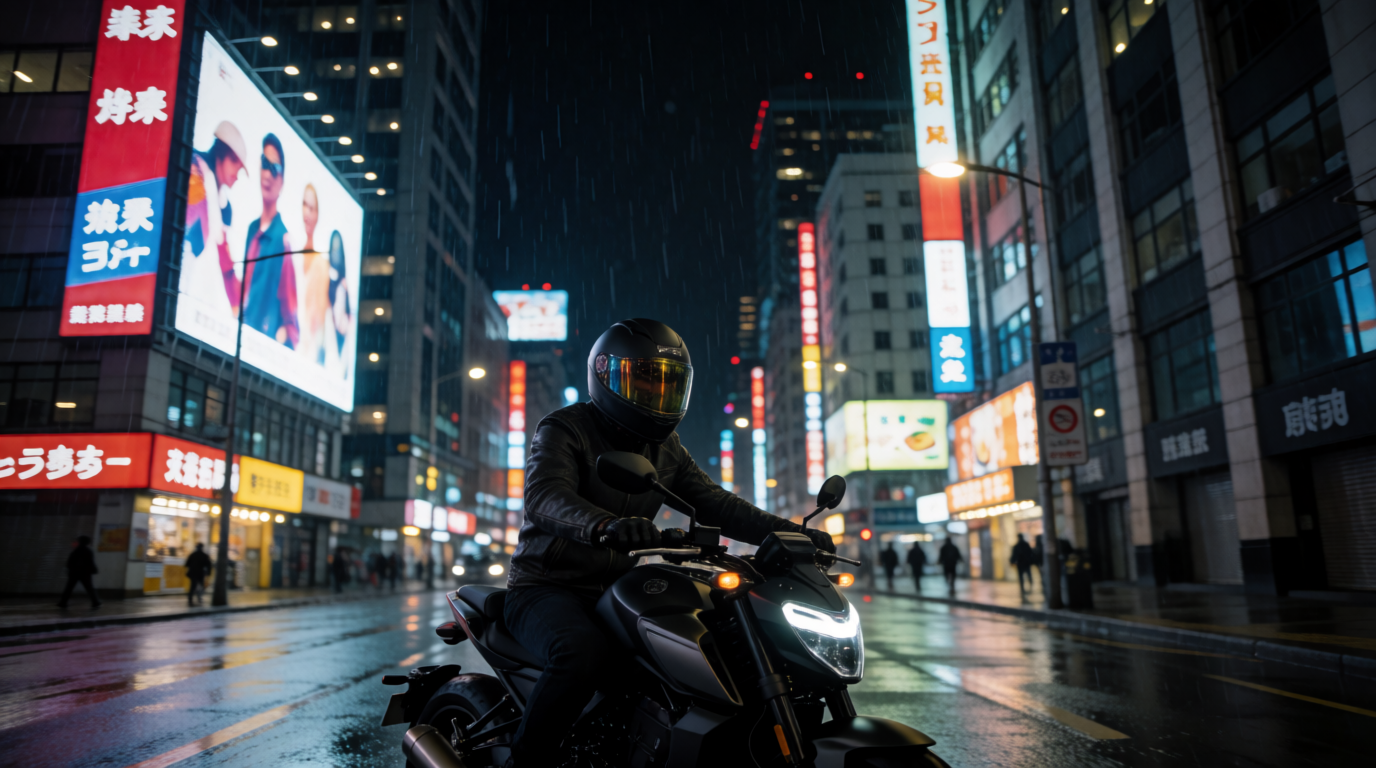
If your model accepts a start image, make the first frame separately. This one is a raw Krea 2 output from the prompt below. Krea generated it, not Higgsfield.
Prompt (start frame, Krea 2):
A cinematic film still of a lone motorcyclist on a rain-soaked neon-lit city street at night, wet asphalt reflections in magenta and cyan, shallow depth of field, anamorphic lens flare, 35mm film grain, wide shot
Where Higgsfield stops: the free tier has no video, credits expire monthly, and its cheapest plan excludes Seedance 2.5, Sora 2, and Veo 3.1. Unlimited models run in a slower queue at peak times and do not work through its MCP or agent.
Runway: the video-first alternative
Runway builds its own models, Gen-4.5 and Aleph 2.0, and also lists Seedance 2.0 and Kling 3.0 on paid plans. Its Free plan gives “125 one-time credits” and 5 GB of storage. Runway’s help center states that every video made on the Free plan carries a Runway watermark, and that credits cannot be bought on Free. Paid plans on 2026-09-14: Standard at $12/month billed annually ($15 monthly) with 625 credits per month; Pro at $28/month billed annually ($35 monthly) with 2,250 credits; and Max at $76/month billed annually ($95 monthly) with 9,500 credits and one month of credit rollover. All paid plans list “Access to all AI video & image models” and “No watermarks.” Runway’s usage-rights article says content you create is yours to use without non-commercial restrictions.
Prompt (Runway Gen-4.5, image to video, 5 seconds):
Slow orbit around a matte black earbuds case on wet slate. The camera circles a quarter turn to the right, water droplets catch a single hard key light, cool rim light traces the edge, dark charcoal background, product commercial, no text.
Variation tips: Runway responds well to a named camera move plus a duration (“quarter turn,” “two-second push-in”). Keep the background static so the model spends its motion on the subject.
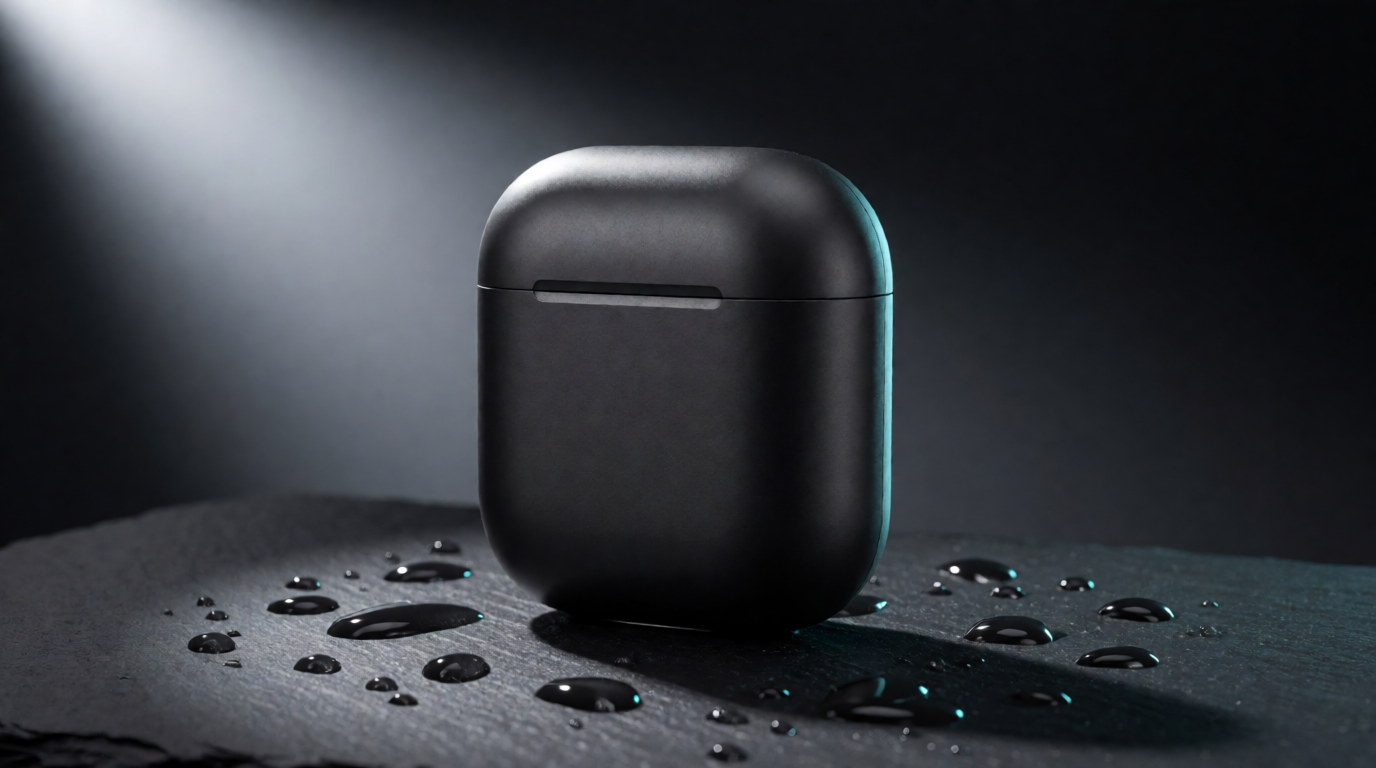
Here is a start frame for that shot. It is a raw Krea 2 output from the prompt below. Krea generated it, not Runway.
Prompt (start frame, Krea 2):
A studio product photo of a matte black wireless earbuds charging case standing on a wet slate slab, one hard key light from the upper left, thin cool rim light, dark charcoal gradient background, water droplets on the slate, editorial commercial photography
Where Runway stops: the free credits are one-time, and the output is watermarked. Its third-party model list is short next to Higgsfield’s or Krea’s, and its pricing page does not publish per-clip credit costs.
Krea: images and video in one place, free plan for images
Krea is our tool, so here is the plain version. Krea 2 is Krea’s in-house image model. Around it, Krea runs a video library that includes Seedance, Kling, Veo, and Sora, an image library with third-party models, LoRA training, upscaling, and Krea Agent, which plans and runs generations across models from one brief.
The Free plan, as published on krea.ai/pricing on 2026-09-14: $0, 100 compute units per day, no credit card. It includes Krea 2 images, Krea Agent, real-time models, LoRA training on up to 50 images, and basic upscaling to 2K. Image concurrency is 1 and video concurrency is 0. It does not include the full image-model library, any video model, 3D or lipsync, Krea Nodes, App Builder, a commercial license, or relaxed generations.
Paid plans, with the page’s default yearly toggle: Basic at $5/month billed yearly ($9 monthly) with 5,000 compute units per month, which the page equates to about 20 Seedance 2.0 videos; Pro at $21/month billed yearly ($35 monthly) with 20,000 units and “full access to all video models including Veo3, Sora, Kling, and more”; Max at $63/month billed yearly ($105 monthly) with 60,000 units and LoRA training on up to 2,000 images; and Business at $160/month billed yearly ($200 monthly) with 80,000 units for up to 50 seats. Paid plans carry the commercial license. Basic includes “selected video models”; Pro and above include all of them.
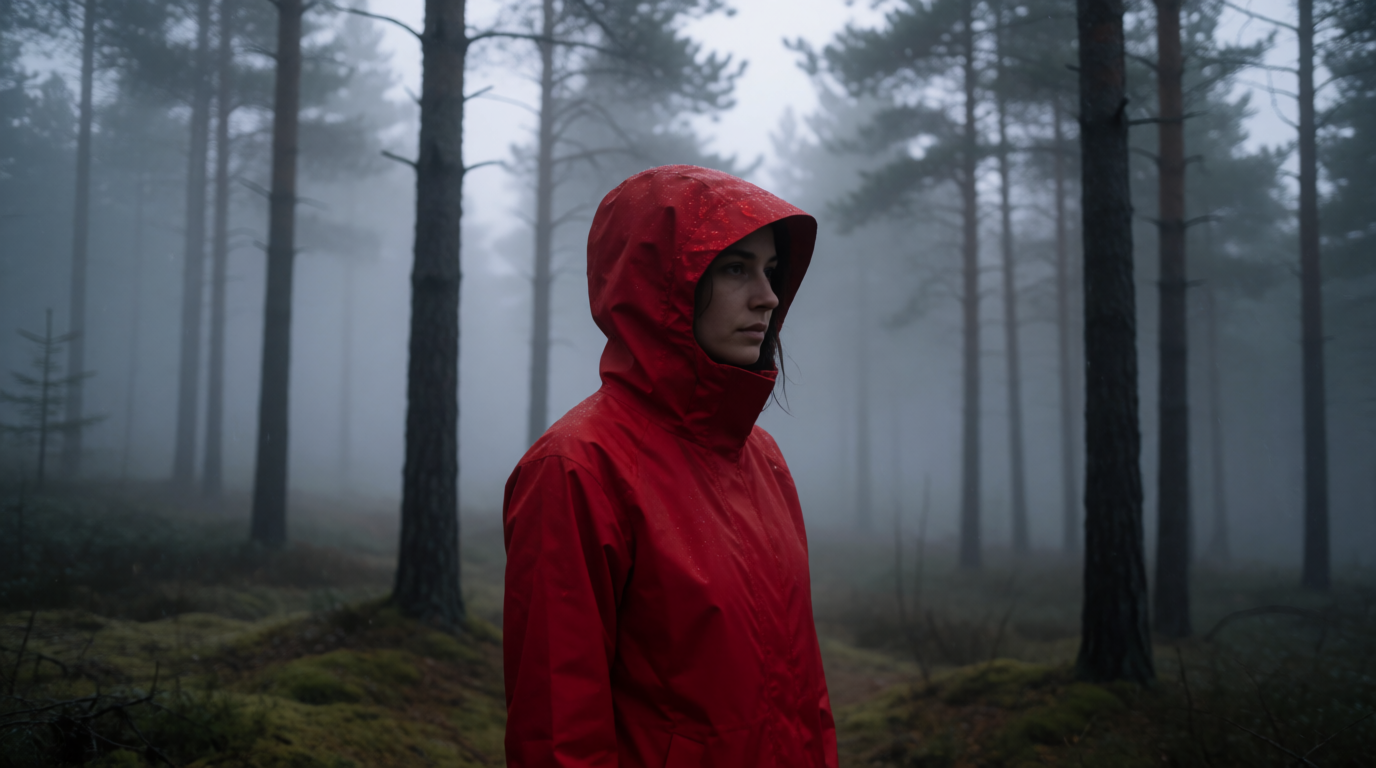
Here is what the free tier produces. One raw Krea 2 output from this prompt:
Prompt (Krea 2):
A medium shot of a woman in a bright red raincoat standing in a foggy pine forest at dawn, soft diffused light, muted green and grey palette with one red accent, cinematic color grade, shallow depth of field
Variation tips: keep the palette line and swap the subject. “One red accent” is the phrase doing the work; it keeps the frame quiet everywhere else.
Where Krea stops: the free plan is images only. Video, the full model library, and the commercial license start at Basic. Krea does not sell a Cinema Studio-style shot planner, a talking-avatar tool, or a UGC ad builder as separate products; you build those flows from the models and the Agent. For a model-by-model view, see the 5 best AI video models on Krea in 2026.
Higgsfield vs Runway vs Krea: the comparison
| Higgsfield | Runway | Krea | |
|---|---|---|---|
| Cheapest paid plan | Starter, $19/month, 270 credits | Standard, $12/month billed annually ($15 monthly), 625 credits | Basic, $5/month billed yearly ($9 monthly), 5,000 units |
| Mid plan | Plus, $47/month annually ($59 monthly), 1,200 credits | Pro, $28/month annually ($35 monthly), 2,250 credits | Pro, $21/month yearly ($35 monthly), 20,000 units |
| Free tier | 0 credits, images on two models, no video | 125 one-time credits, watermarked | 100 units/day, Krea 2 images, no video |
| Card required for free | No | No | No |
| Third-party video models | Seedance, Kling, Sora 2, Veo 3/3.1, Wan, Hailuo, Grok | Seedance 2.0, Kling 3.0 | Seedance, Kling, Veo, Sora, and more |
| In-house models | Soul, Soul 2.0, DoP | Gen-4.5, Aleph 2.0 | Krea 2 |
| Image + video in one plan | Yes | Yes | Yes, from Basic |
| Commercial license | Paid plans (table); terms do not restrict output use | All plans per help center; free output watermarked | Paid plans |
| Credits roll over | No | Max plan, 1 month | Relaxed generations on paid plans after units run out |
| Agent | Supercomputer | No | Krea Agent, on Free |
Cost per clip is the number these tables hide. Higgsfield publishes it (about 7 credits per 5-second Kling 3.0 clip); Krea’s page equates Basic’s 5,000 units to about 20 Seedance 2.0 videos; Runway publishes credits per plan only. Run one identical brief on each before you commit a month.
Two more raw Krea 2 outputs
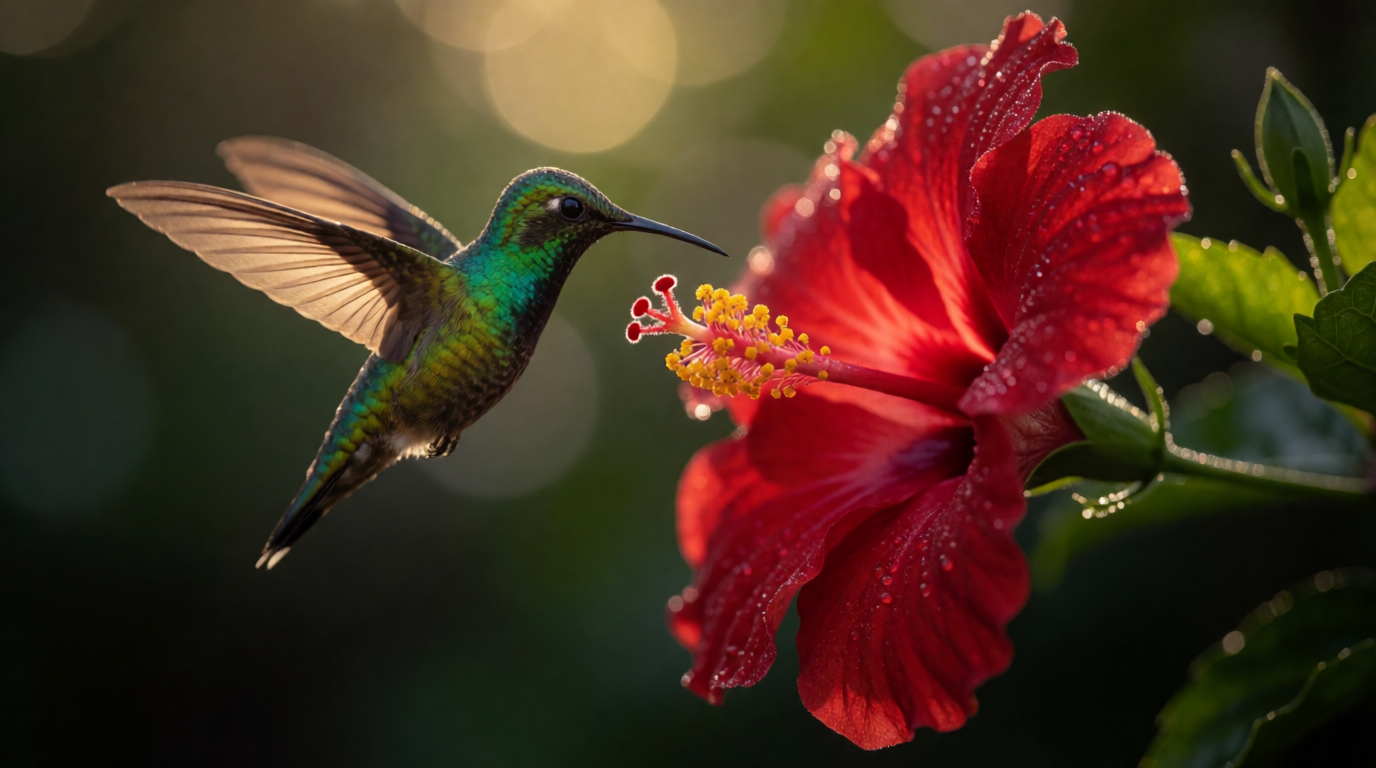
Both are single, raw Krea 2 generations from the prompts below. Either works as a start frame for an image-to-video model on any of the three tools.

Prompt (coastal highway):
An aerial view of a coastal highway winding along tall limestone cliffs above turquoise water at golden hour, long warm shadows, a single white car on the road, high detail, cinematic travel photography
Prompt (hummingbird):
A dramatic macro close-up of a hummingbird frozen mid-flight beside a red hibiscus flower, iridescent green feathers, soft morning backlight, shallow depth of field, dark blurred garden background, wildlife photography
Variation tips: for a start frame, describe the moment before the motion (“a single white car,” “frozen mid-flight”). The video model then has one clear thing to move.
Is Higgsfield better than Runway?
They are different shapes. Higgsfield is a broad aggregator with its own tools on top; Runway is a model maker with a short, curated list. Runway’s cheapest plan is $12 to $15 per month with 625 credits and all its models; Higgsfield’s is $19 with 270 credits and excludes Seedance 2.5, Sora 2, and Veo 3.1 until Plus. Runway’s free tier is watermarked and one-time; Higgsfield’s has no video at all. We did not run a paid quality test, so this post makes no quality claim for either. For a free-tier comparison across more video tools, see the best free AI video generators in 2026.
Which should you pick?
- You want Kling, Seedance, Sora, and Veo behind one login, and you will pay from day one → Higgsfield Plus or Krea Pro. Compare $47 to $59 for 1,200 credits against $21 to $35 for 20,000 units on your own clips.
- You want Runway’s Gen-4.5 or Aleph specifically → Runway. Only Runway runs them.
- You want to make images free every day, and add video later → Krea. 100 units a day on Krea 2, then Basic at $5 to $9 for selected video models.
- You make talking-avatar or UGC ads and want a packaged tool → Higgsfield Plus (Speak and the UGC builder start there). On Krea, build the same flow from the models; see how to make AI ads and UGC ads for free in 2026.
- You cannot upload client material to anything that trains on it → read Higgsfield’s training clause first. Krea’s Business plan lists no-training terms.
For a deeper look at the two models that anchor most of these plans, read Seedance 2.5 vs Kling 3.0.
Frequently asked questions
What exactly is Higgsfield?
Is Higgsfield AI legit?
Is Higgsfield a US company?
Is Higgsfield free or paid?
How much is Higgsfield?
Is Higgsfield better than Runway?
Try the same video models on Krea
Seedance, Kling, Veo, and Sora next to Krea 2. 100 compute units a day free for images, video from $5 a month.
See Krea plans